
Last updated October 17, 2026
 Metal roofing
 Architectural shingles
 Tile roofing
 GAF
GAF Owens Corning
 Flat & low-slope
Free roof inspection with deck photos before we talk money - GAF and Owens Corning certified installation
Roofing Warning Signs: A San Francisco Homeowner’s Reference Guide
San Francisco roofs fail differently than roofs in Phoenix or Dallas or Minneapolis. The constant fog, the salt air, the Victorian-era framing, the flat and low-slope roof decks that dominate whole neighborhoods from the Outer Sunset to Bernal Heights. The warning sign San Francisco homeowners most consistently miss isn’t visible from outside the house at all. It’s a faint rust-colored stain along an interior ceiling corner, meaning flashing at a parapet or chimney junction has been leaking through the deck for months. By the time it shows indoors, the deck framing below is often already compromised. This guide is calibrated to San Francisco construction types and climate, not to generic home improvement advice. You’ll learn what to look for on flat roofs and pitched roofs, how to read stains and granules and shingle edges, what each clue actually means about the failure point, and how to decide whether you’re looking at a cosmetic annoyance or a structural emergency. It’s written by roofers who work these streets, not by a content farm assembling national statistics.
Quick Answer
The roofing warning signs that matter most in San Francisco are interior rust stains at ceiling corners (failed flashing at chimneys or parapets), sagging or spongy roof decking from decades of fog moisture, and ponding water that doesn’t drain within 48 hours on flat and low-slope roofs. Granule accumulation in gutters is a normal part of shingle aging, but when those granules pile up as fine sand in streaks while bare asphalt shows along shingle edges, membrane failure has already begun. Cosmetic issues can wait for the next scheduled inspection; structural signs in load-bearing decking or multiple interior stains cannot. The repair cost difference between catching a flashing failure early and replacing rotted deck framing is routinely $1,800 to $4,000 on San Francisco homes. The Brennan Roofing Co San Francisco home page has more on the full scope of local roof work, but this guide walks through every sign, what it means, and what it costs to address.
Styles & brands we work with
Table of Contents
- Interior Warning Signs: Reading Stains, Paint, and Attic Air
- Exterior Warning Signs on Flat and Low-Slope Roofs
- Exterior Warning Signs on Pitched Shingle Roofs
- Granules in the Gutter: Normal Aging vs. Membrane Failure
- Cosmetic vs. Structural: What Each Sign Costs If You Wait
- Flashing Warning Signs on Victorian and Edwardian Homes
- Common Mistakes to Avoid
- When to Call a Professional
Interior Warning Signs: Reading Stains, Paint, and Attic Air
Interior signs appear late. That’s the first thing to understand. Water entering through a failed roof component travels along rafters or joists before it finds a path to visible drywall or plaster. By the time a stain forms on a ceiling, the leak has been active long enough to wet insulation, stain decking, and begin softening wood fibers. Reading these signs correctly saves thousands of dollars, but it requires rejecting the instinct to paint over them and move on.
Rust-colored ceiling stains at wall or ceiling junctions. This is the classic San Francisco roof failure, and it’s different from a brown water stain from a plumbing leak. Rust color means the water passed through corroding metal: a galvanized valley flashing, a lead chimney flashing, an old metal parapet cap. The water picks up iron oxide and deposits it on your ceiling. When we inspect a home in Noe Valley or the Richmond District and find a rust stain near a wall that corresponds to a parapet or chimney above, the first suspicion is always flashing, not shingle failure. The roof membrane above may look perfectly intact from the outside.
Bubbling or peeling paint on ceilings and upper walls. Paint bubbles form when water vapor pushes against the paint film from behind, or when moisture migrates through plaster and releases the bond. In San Francisco’s older homes, this often traces to attic condensation rather than a direct leak. A poorly ventilated attic with insufficient baffles traps fog-season moisture against the underside of the sheathing. It condenses and drips, and the paint fails slowly, from above. If the bubbling is confined to a corner under a valley or chimney, think leak. If it’s diffuse across the entire ceiling, think ventilation.
Musty attic air or visible condensation on nails and metal braces. Walk the attic on a foggy morning. If you see water droplets beading on the underside of the sheathing or on nail points penetrating the deck, the attic is holding too much moist air from the living space below. Over decades, this constant elevated humidity does to the deck what direct rain does in years: it rots the plywood or tongue-and-groove boards from above. San Francisco’s marine layer keeps exterior humidity high, but attic humidity should remain close to exterior levels if gable, soffit, and ridge venting are working.
Soft or spongy spots when walking the attic deck. If a section of sheathing gives underfoot more than adjacent sections, that’s not settling. That’s rot. Plywood delaminates and loses rigidity first, then structural capacity. This is an urgent sign because it means the deck is no longer a reliable nailing surface for replacement roofing material.
- Locate the stain or paint failure. Trace it upward mentally: does a chimney, parapet wall, skylight, or valley sit directly above?
- Check the attic during or immediately after rain. Look for daylight at penetrations, wet sheathing, or staining around fasteners.
- If the attic is dry but humidity is high and the deck shows dark staining, suspect ventilation failure and call a roofer at Roof Inspection in San Francisco standards.
- Never assume a stain is “old” until you’ve verified the deck directly above it is dry and sound.
Exterior Warning Signs on Flat and Low-Slope Roofs
Flat roofs make up a huge share of San Francisco’s roofing stock: the modern condo buildings along Mission Bay, the mid-century boxes in the Sunset, the rear additions on Victorians in the Mission. Flat is a misnomer. These roofs should slope at least 1/4 inch per foot toward drains or scuppers. When that slope disappears, or when drains clog with debris from overhanging trees, water ponds.
Ponding water that remains 48 hours after rain. This is the single most important exterior warning on a flat roof. A small, shallow puddle after a light drizzle is normal. A standing pool that covers seams or laps and doesn’t drain for two days or more is a failure in progress. Standing water accelerates membrane degradation by concentrating UV-absorbed heat and by providing a constant point of hydrostatic pressure. Flat roofs in San Francisco’s fog belt get less UV than inland roofs, but ponding still decomposes asphalt-based membranes and breaks down the protective surfacing on torch-down and granulated cap sheet systems.
Visible seams lifting or curling at lap joints. On built-up and modified bitumen roofs, the laps where one roll ends and the next begins are welded or torched together. Over time, especially on roofs that pond, these seams delaminate. You can see the edge lifting from the roof surface, usually as a fine dark line extending across the field. Water works into these openings and spreads laterally below the surface.
Blistering raised patches in the membrane. A blister is a bubble of trapped moisture or vapor between membrane plies or between membrane and insulation. Blisters look like small raised mounds, sometimes soft when pressed. A blister that remains sealed is a cosmetic issue. A blister that cracks or punctures becomes a direct entry point for water. San Francisco’s thermal cycling, mild as it is, still causes expansion and contraction that eventually splits blisters.
Cracking or alligatoring on asphalt surfaces. Built-up roofs with an asphalt surface develop a network of fine cracks as the asphalt oxidizes. This pattern, called alligatoring because it resembles reptile skin, means the roof has lost its elasticity. Rainwater sits in those cracks and seeps through. A fully alligatored roof may not leak today, but it has reached the end of its serviceable life and will leak sooner than later.
Debris dams at drains and scuppers. Leaves from street trees, pine needles, and the occasional wind-blown trash item collect at roof drains. A clogged drain turns a flat roof into a swimming pool in one rainy week. If the roof has overflow scuppers, they may handle the load. If not, the water rises to flashings and door thresholds, where the weakest point always fails first.
Exterior Warning Signs on Pitched Shingle Roofs
Most single-family San Francisco homes with pitched roofs wear asphalt shingles: three-tab or architectural. The installation survives or dies on underlayment, nailing pattern, and flashing. Shingle signs are visible from the ground or from a ladder at the eave line, and each means something specific.
Curling or cupping shingle edges. When a shingle’s outer edge lifts and curls upward, the asphalt has lost volatiles and is beginning to shrink. A curling shingle is brittle, and a brittle shingle cracks instead of flexing in wind. Cupping, where the center of the shingle dips and edges lift, often points to an underlayment or decking problem beneath. Both conditions shed water less effectively and signal that the roof is in its final third of service life.
Missing shingles after a wind event. A missing shingle is an open invitation. Exposed fasteners and bare underlayment take the brunt of the next rain. One or two missing shingles is a repair job. A pattern of missing shingles across multiple slopes after moderate winds means the original installation nailed in the wrong zone, and the whole field is unreliable.
Dark streaks or moss growth. Dark staining on asphalt shingles is usually Gloeocapsa magma, an algae that feeds on the limestone dust in the granule coating. It’s ugly, but it rarely causes leaks by itself. Moss is different. Moss holds moisture against the shingle surface, works its tendrils under shingle laps, and lifts them over time. On shaded San Francisco slopes, especially north-facing planes in the Avenues and Glen Park, moss accelerates shingle decay measurably.
Buckling or wavy deck lines across the roof surface. When the deck itself is visible as a series of soft undulations under the shingles, the sheathing has absorbed moisture and expanded, or the rafters have deflected, or both. This is a structural sign, not a cosmetic one. It means the deck has experienced significant moisture cycling and may need section replacement.
Visible fasteners or nail heads. A properly installed shingle hides its fasteners under the layer above. When you see nail heads on the exposed face of shingles, they were either driven too high on the last repair or the shingles have slipped. Exposed fasteners rust, and rusted fasteners fail.
Granules in the Gutter: Normal Aging vs. Membrane Failure
Every asphalt shingle sheds granules for its entire life. The granules are crushed stone pressed into hot asphalt. Some release with rain from day one. So seeing granules in the gutter doesn’t automatically mean the roof is failing. What matters is volume, pattern, and what the shingle looks like after the granules leave.
Normal granule accumulation: A light, even dusting of granules across the gutter bottom after a year. The shingles above still show a uniform surface color. Individual granules are loose but the asphalt beneath remains fully covered. The roof is aging normally.
Accelerated granule loss: Granules accumulate in thick streaks or piles, and the shingle surface above shows visible patches of bare black asphalt or shiny bitumen where the granule layer is gone. The roof is shedding its protective UV layer faster than it’s designed to, and the exposed asphalt oxidizes and shrinks. This is membrane failure in progress, even if the roof doesn’t leak yet.
The bathtub ring test: If your gutters show consistent granular sediment and the shingles directly above show erosion near the shingle edges but not the center, that’s a third pattern: localized UV exposure differences. It’s less urgent than full-surface loss but worth tracking annually.
What it costs: Granule loss alone is not repairable. Once the granule layer is depleted on a meaningful share of the field, the roof needs replacement. Partial replacements on aging roofs are money spent on a surface that will continue to shed. The economic question is when, not whether.
Cosmetic vs. Structural: What Each Sign Costs If You Wait
One of the hardest things for a homeowner to assess is urgency. Two roofs can both have visible issues, and one can wait a year while the other needs attention this season. Here’s how we break it down on San Francisco homes.
Cosmetic issues that can wait:
- Algae streaking or moss on shaded slopes. Aesthetically unappealing, functionally low risk in the short term. Address it with a gentle cleaning or zinc strip when convenient.
- Minor granule accumulation in gutters with full shingle coverage. Normal aging. Track it annually with photos and an Roof Inspection in San Francisco appointment.
- Small blisters on a flat roof that remain sealed. Monitor them. If they crack, they become urgent.
- Fading color or small patches of algae on asphalt roofs. Not a structural concern.
Structural issues that need attention now:
- Soft or spongy decking. The deck is the foundation. Everything above it anchors to it. Rotted deck sections must be replaced before new roofing goes on. Waiting turns a $1,200 deck section repair into a $4,000-plus structural replacement with interior drywall work.
- Multiple interior stains in different rooms. A single, isolated stain suggests one failure point. Multiple stains in separate areas often mean the entire assembly has degraded and water is entering at several points.
- Persistent ponding after 48 hours. The damage compounds every week. Membranes rated for 20 years fail in 10 under standing water.
- Visible deck flexion or sag. If a roof deck sags between rafters or trusses when viewed from the attic or the exterior, the structural component is being asked to carry load it wasn’t designed for. This is beyond a roofing repair: it requires evaluation by a contractor and potentially an engineer.
The cost difference between addressing a flashing leak early and waiting until the deck and interior framing absorb months of water routinely ranges from $1,800 to $4,000 on San Francisco homes. Replacing a 12-foot run of failed flashing around a chimney is a $600 to $1,200 repair on most homes. Replacing the same flashing plus the rotted deck below, reconstructing the interior ceiling, and remediating mold runs into the thousands.
Flashing Warning Signs on Victorian and Edwardian Homes
The Victorian and Edwardian stock that defines so many San Francisco neighborhoods presents specific flashing challenges. These homes were built with original lead or galvanized steel flashings that are now 80 to 130 years old. The materials have outlived their expected service life, often several times over. Here’s how failure presents.
Original galvanized flashing at chimneys and parapets. Galvanized steel flashings have a zinc coating that corrodes over time, especially in the salt-tinged air near the Pacific. The fasteners holding the flashing rust and the metal itself thins until it fractures at bends. Visually, you’ll see white-gray corrosion, pitting, or a crumbling edge where the flashing turns into the wall. Any rust stain indoors below a Victorian chimney is almost always failed galvanized or lead flashing.
Lead flashing at sidewall junctions and step flashings. Lead lasts longer than galvanized in terms of corrosion resistance, but lead flashings fail mechanically. The metal is soft and develops fatigue cracks from decades of thermal expansion. A lead step flashing crack looks like a hairline line where the flashing bends over the shingle. It’s nearly invisible from the ground, which is why attic inspection matters.
Parapet conditions on Edwardian rows. Edwardian homes in the Richmond and Sunset often have parapet walls along the front facade. The parapet cap, normally a metal or tile covering, keeps water out of the wall cavity. A cracked or missing cap lets water run down inside the wall, and the first interior sign is paint bubbling near the ceiling line at the front of the house.
What a repair looks like: modern exposed fasteners at parapet caps get replaced with concealed cleats, and original galvanized gets replaced with a compatible metal, usually a coated steel or a lead substitute. The Roofing Company in San Francisco approach is to replace the entire flashing run in one piece, not to patch segments, because a patch leaves the original seam below to fail again.
Common Mistakes to Avoid
- Painting over a ceiling stain without confirming the deck is dry. The stain is the symptom, not the problem. Paint hides the evidence while water continues moving through the structure. Keep the stain visible until a roofer has verified the source is resolved.
- Assuming a small blistered area on a flat roof is harmless. Small blisters can stay sealed for years, but they can also split in a single hot day. If you’re not checking them every season, you’re betting against the odds on a San Francisco flat roof.
- Cleaning moss off shingles with a pressure washer. Pressure washing destroys the granule layer and drives water under shingle laps. It creates the very leak you’re trying to prevent.
- Ignoring a rust-colored stain because it didn’t grow during the last rain. Water moves through roof assemblies in fits and starts. A stain that appears static for months can reactivate when the wind drives rain from a new direction, a common occurrence on San Francisco’s exposed western slopes.
- Waiting until multiple shingles blow off to assess the roof. By the time shingles are regularly departing, the nailing pattern or the underlayment has already failed. A proactive inspection after the first lost shingle typically catches the problem when it’s still a repair, not a replacement.
- Replacing only the visible damaged section on a roof past two-thirds of its expected life. Partial repairs on an aging roof are temporary by definition. The economics don’t work in San Francisco’s high-cost construction market: labor and mobilization charges make small repairs disproportionately expensive relative to a full replacement over the remaining life.
- Not documenting roof condition with dated photos annually. San Francisco fog and salt air degrade roofs gradually. Without dated photos, you can’t track the rate of change, and rate of change is the single most important factor in deciding between repair and replacement.
When to Call a Professional
Call a roofer when you see a continuous rust-colored stain growing along an interior ceiling line, when you can feel soft spots in the attic deck, when ponding water persists more than two full dry days on a flat roof, or when shingles are curling, cupping, or departing in multiples. Those are the signs of a roofing system actively failing, not aging normally. A flat roof that has begun to alligator or a pitched roof with visible deck flex needs a professional evaluation this season, not next year. If you’re unsure whether what you’re seeing is normal aging or the beginning of a failure, that uncertainty is itself a good reason to have it looked at. Roof Repair in San Francisco has more detail on what emergency repairs look like in this climate. Brennan Roofing Co San Francisco offers free estimates in San Francisco. Call (831) 318-8819 to schedule a visit.
See the difference
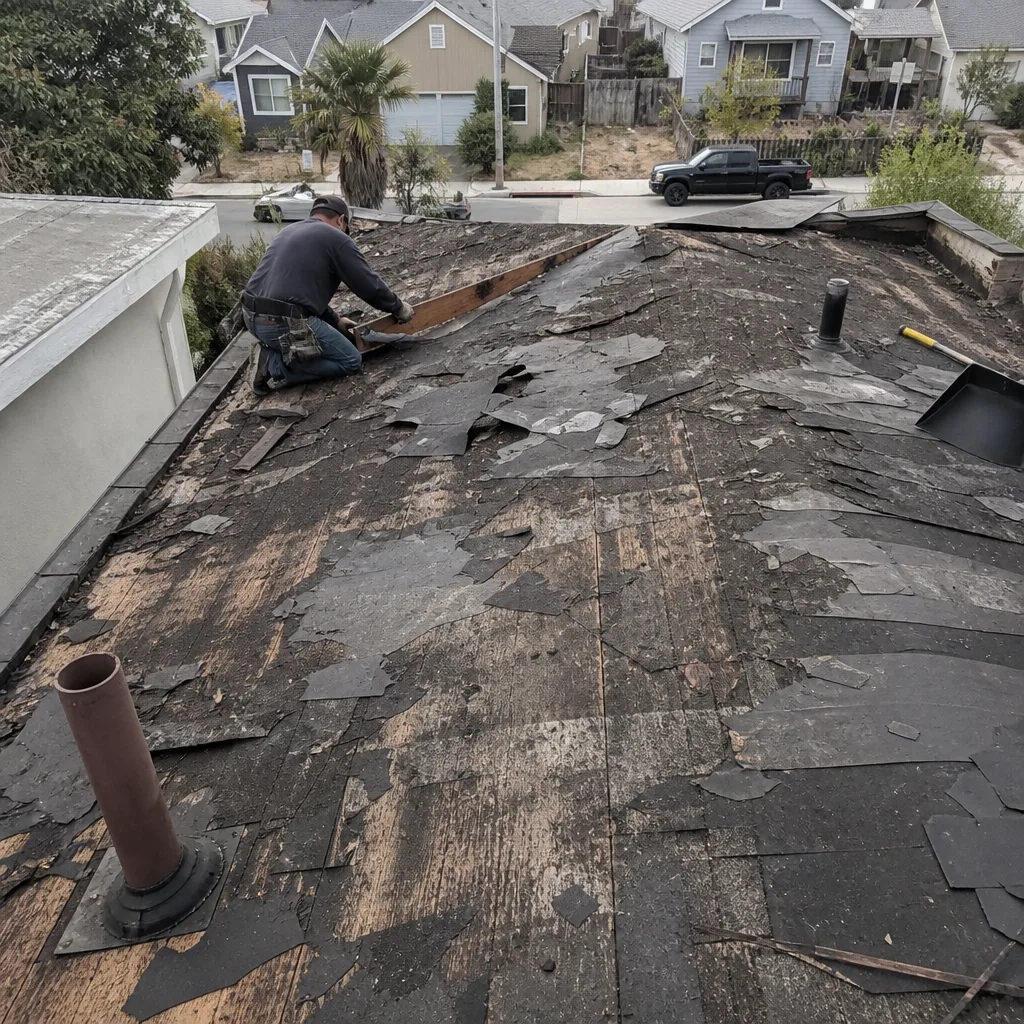 Before
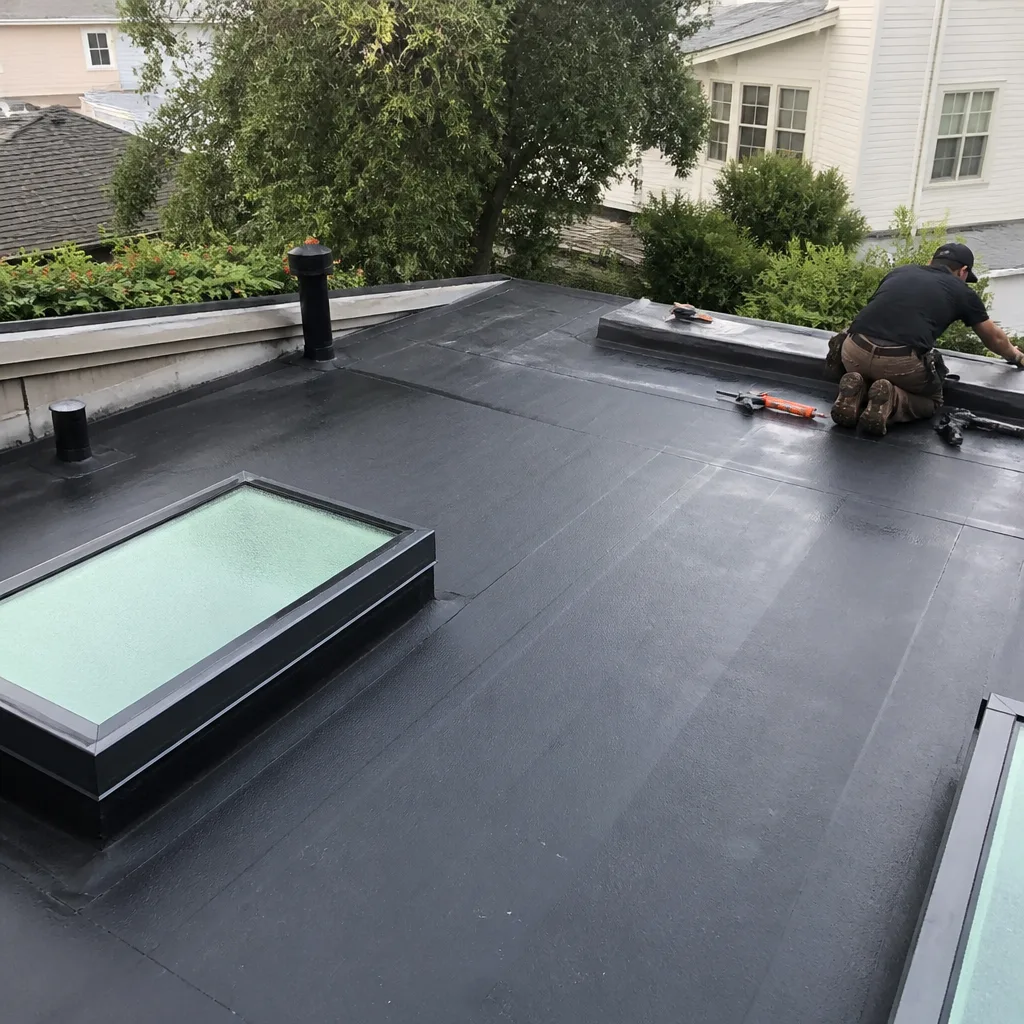 After
After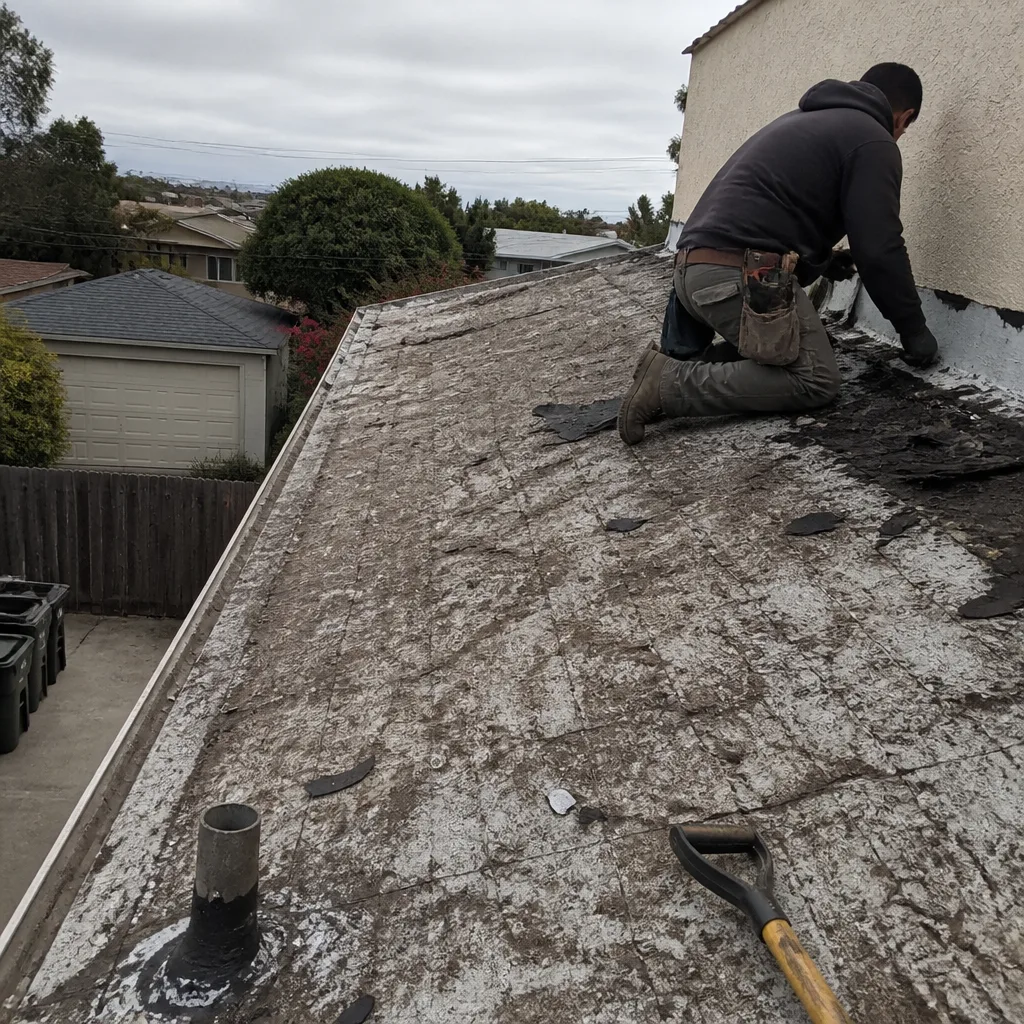 Before
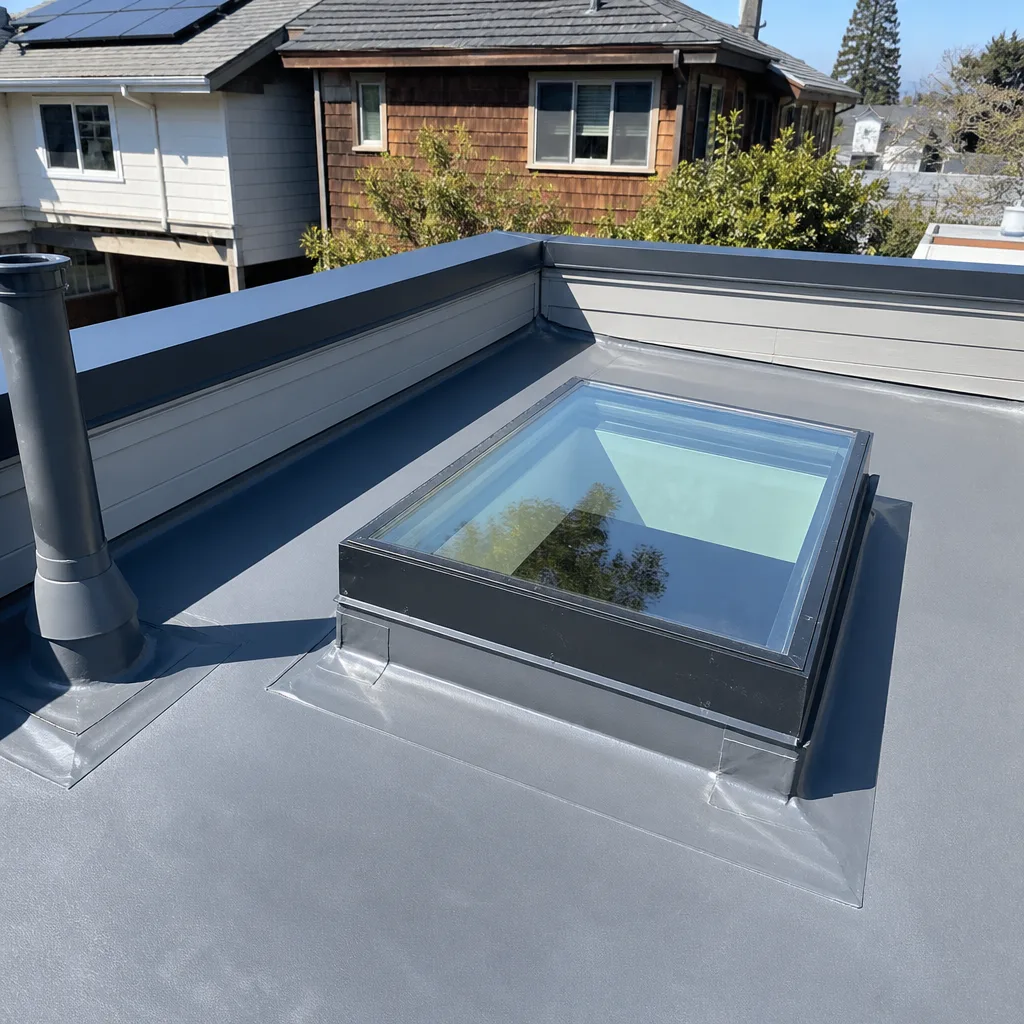 After
After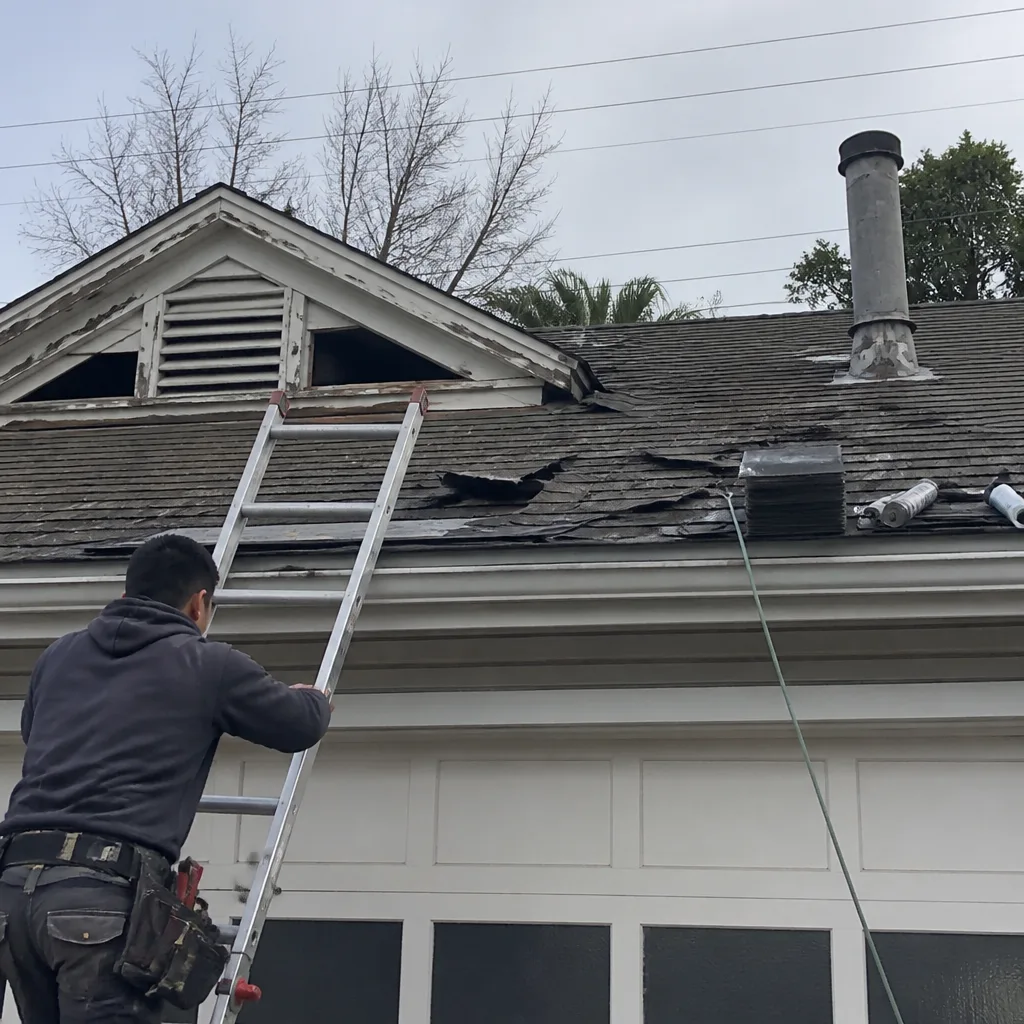 Before
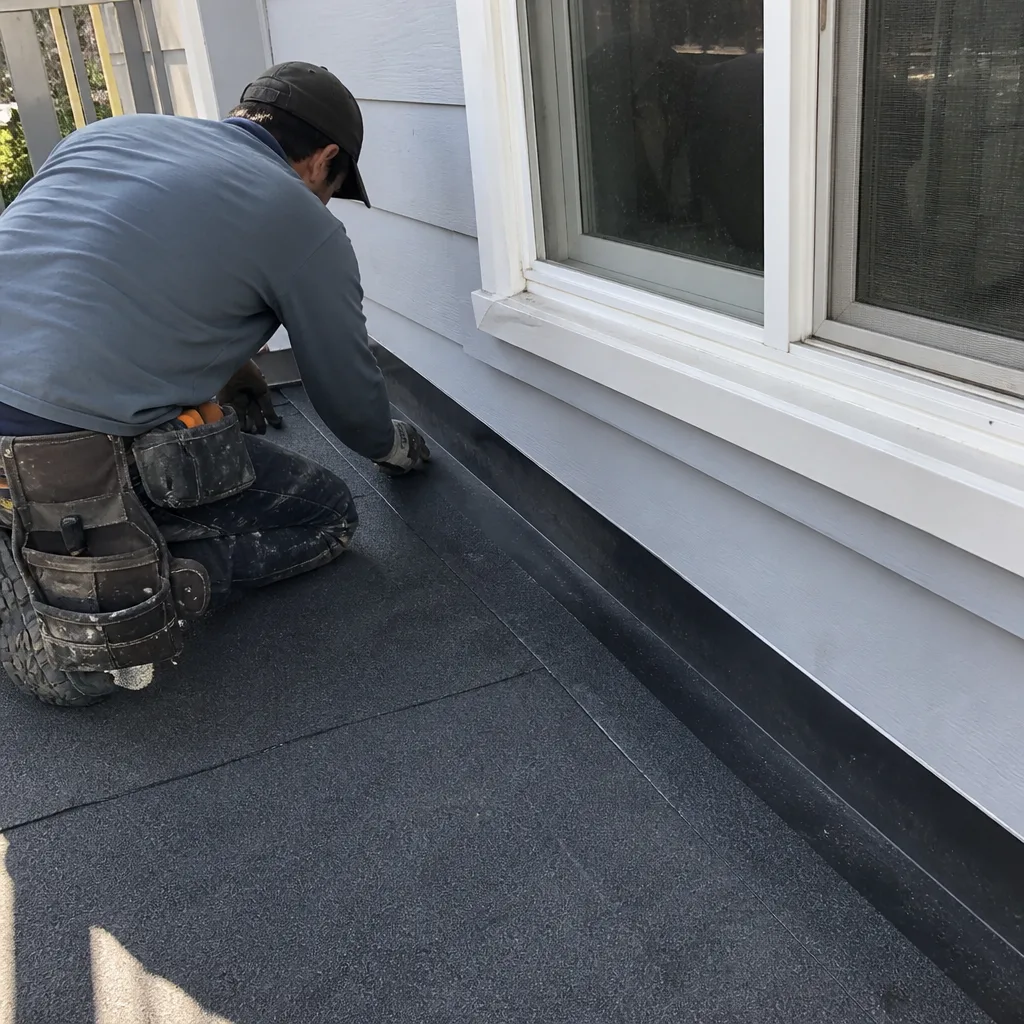 After
AfterFrequently Asked Questions
The most commonly missed sign is a faint rust-colored stain along an interior ceiling corner near a chimney or parapet wall. It means water has been moving through corroded flashing for months, and by the time it’s visible indoors, the deck framing below is often already compromised. Call (831) 318-8819 for an inspection if you see this.
Most isolated San Francisco roof leak repairs run between $400 and $1,400, depending on whether the failure is flashing, a small section of shingles, or a flat-roof seam. If the leak has been active long enough to rot decking, total costs typically rise to $1,800 to $4,000 because the structural wood must be replaced along with the membrane. Written estimates are free with Brennan Roofing Co San Francisco.
Granule loss is normal throughout a shingle roof’s life, but it becomes a failure signal when the shingle surface shows bare asphalt patches where the granules have fully released. At that point, the protective UV layer is gone and the shingles are oxidized and shrinking. A roofer at Roof Inspection in San Francisco standards can document the rate with dated photos.
A flat roof with ponding water can often be repaired if the ponding is caused by a clogged drain or a minor slope deficiency. If the membrane has begun to delaminate at seams or the surface shows extensive alligatoring, replacement is the only reliable option. The answer depends on the membrane’s age and condition, which an inspection will establish.
An annual inspection is reasonable for most San Francisco roofs, with a second check after major storms or unusually high wind events. The marine layer and salt air accelerate material degradation compared to inland climates, so periodic tracking matters more here. Inspections document year-over-year change, which is what tells you whether to plan for repair or replacement.
Victorian and Edwardian homes need flashing replacements that match the remaining original systems and meet current code for the same details. Lead and galvanized steel fail differently and must be addressed with compatible materials and concealed fasteners. A roofer experienced with San Francisco’s older housing stock will evaluate the entire flashing run, not just the visible failure point.
The Bottom Line
San Francisco homes fail at the details: parapet flashings, chimney junctions, backed-up flat-roof drains, and aging galvanized steel worn thin by salt air. The roof itself may look intact from the ground while water works through the assembly for months or years. Reading the interior signs accurately, tracking granule loss by volume and pattern, distinguishing cosmetic from structural conditions, and understanding the specific failure modes of Victorian-era flashing are the skills that protect a San Francisco home from a $4,000 problem instead of a $900 one. The Garrison Standard at Brennan Roofing Co San Francisco puts the price in writing before any work begins, with a 365-Day Done Right Promise on every repair and installation. For a free assessment, call (831) 318-8819. The phone is answered by a live person, around the clock.
Written by Travis Oakley, Owner at Brennan Roofing Co San Francisco, serving San Francisco since 2000.