
Last updated October 17, 2026
 Metal roofing
 Architectural shingles
 Tile roofing
 GAF
GAF Owens Corning
 Flat & low-slope
Free roof inspection with deck photos before we talk money - GAF and Owens Corning certified installation
Seasonal Roofing Care for San Francisco: Year-Round Homeowner’s Guide
September in San Francisco is the month most homeowners aren’t thinking about their roof. It should be the month they are. The Diablo winds arrive in October, the first atmospheric river often hits by November, and any roof vulnerability exposed between June and August is still sitting there, waiting. This guide maps San Francisco’s actual roofing calendar: four distinct phases that don’t match any traditional seasonal model, each with specific actions you can take from the ground, without a contractor, to protect the most expensive protective layer on your home.
Styles & brands we work with
Quick Answer
Seasonal roof maintenance in San Francisco follows four real phases: the fog season (January through April, when moisture drives moss and algae on north and west slopes), the dry-wind season (September through October, when Diablo winds stress flashing and penetrations), the storm window (November through December, when atmospheric rivers test every seam), and the post-storm period (48 to 72 hours after major rain, when damage is visible from the ground). Homeowners should inspect gutters and downspouts before the first major rain, check flashing and vents after every Diablo event, and schedule a professional Roof Inspection in San Francisco once per year, ideally in early October before the storm window opens.
Table of Contents
- The Fog Season: January Through April
- The Dry Summer: May Through August
- Diablo Winds: September Through October
- The Storm Window: November Through December
- The Post-Storm Inspection Routine
- Flat Roofs and Low-Slope Roofs: A San Francisco Reality
- Common Mistakes to Avoid
- When to Call a Professional
- Frequently Asked Questions
- The Bottom Line
The Fog Season: January Through April
San Francisco’s fog is not occasional weather; it’s a daily event for roughly four months of the year. The marine layer rolls in most mornings, sits on rooftops for hours, and burns off slowly, particularly in western neighborhoods like the Sunset, the Richmond, and Parkside. That persistent moisture creates conditions most other American cities never see: roofs that stay damp for 12 to 16 hours a day, every day, for weeks at a time.
Fog-driven moisture does two things to a roof. First, it feeds moss and algae growth, which accelerates dramatically on north-facing and west-facing slopes where the sun never fully dries the surface. Moss isn’t just cosmetic. As it holds water against the shingle surface, it works its way under the granules and reduces the life expectancy of the material underneath. Second, the constant dampness exposes weak points in flashing and seals. A tiny gap in a vent boot or a hairline crack in pipe collar flashing stays wet long enough for wood to swell, nails to back out, and the gap to widen.
Left alone for multiple fog seasons, this cycle turns minor maintenance into structural repair. The good news is that fog season is visible. You don’t need to climb a ladder to spot it.
What to do during fog season
- Look at your roof on three clear mornings in a row. Walk to the sidewalk, stand across the street, and look at the north and west slopes. Look for dark patches, green tinting, or uneven coloring. Moss starts as a thin, almost invisible layer before it thickens into the visible tufts most people associate with neglected roofs.
- Check for moss after the fog lifts, not during it. A wet moss patch looks black or dark green and may blend into the shingles. A dry moss patch, visible on a sunny afternoon, looks brownish-green, crusty, and distinctly raised. If you see texture where there shouldn’t be texture, that’s organic growth.
- Look at the drip edge and gutter line. Moss and algae shed spores into the gutter system, where they take hold and grow. If your gutters show green staining on the outside face or a sludge-like buildup inside, the roof above is feeding that growth.
The right time to treat moss in San Francisco is late fog season, around April, after the heaviest moisture has passed but before the dry season allows the growth to harden and bond to the shingle surface. Moss treatment is one of the few roof maintenance items that homeowners can handle safely from the ground, but walking on a wet or moss-covered roof is dangerous. If the growth is widespread, call a professional who can assess slope stability before stepping onto the surface.
The Dry Summer: May Through August
San Francisco summers are unusual. While the rest of California bakes under triple-digit heat, the city often sits under a cool, gray marine layer until noon, then clears to mild sunshine for a few hours. That temperature pattern matters for roofs, because the daily temperature swing, even on a cool day, creates expansion and contraction cycles that push and pull on every seam, joint, and penetration.
For flat roofs and low-slope roofs, which cover a significant portion of San Francisco’s housing stock, summer is the critical season for inspection and repair. Flat roof membranes, whether they’re modified bitumen, TPO, or an older built-up roof, absorb solar heat directly. The surface temperature of a dark flat roof on a clear August afternoon can exceed 140 degrees, even when the air temperature stays in the 70s. That heat causes blistering, a condition where the membrane separates from the substrate and forms bubbles. Blisters left through the winter absorb moisture, freeze and thaw, and eventually split open, creating a direct path for water into the building.
Seam separation is the other summer problem. Flat roof seams are heat-welded or adhered, depending on the material. Repeated expansion and contraction cycles over several summers can cause seams to pull apart at the edges. A seam that’s separating in August may not leak until November, when the first atmospheric river pushes water through it. That’s why the dry summer is the right time to address flat-roof blistering and seam separation, not the spring. You want those repairs made while the surface is dry and can be cleaned and prepared properly.
What to do during the dry summer
- Check your flat roof from any window, deck, or neighboring roof line you can access safely. Look for bubbles, blisters, wrinkles, or areas where the membrane appears to be lifting. Pay special attention to areas around penetrations: vent pipes, HVAC units, skylights, and drain scuppers.
- Look for pooled water after any unexpected summer rain. San Francisco summer rain is rare but not unheard of. Standing water on a flat roof 24 hours after rain means the drainage system isn’t working. Flat roofs should drain completely. Pooled water accelerates membrane breakdown and adds significant weight load.
- Check exposed fasteners and metalwork. Flashing, edge metal, and roof drains expand and contract at different rates than the membrane. Look for screws or nails that have backed out, gaps between metal and membrane, and rust staining.
Summer is also the season when the roofing industry has the most available scheduling capacity. If you want a full Roof Inspection in San Francisco, August is a strong window. You’ll get an assessment before the wind and rain arrive, and you’ll have time to address anything found before the storm window opens.
Diablo Winds: September Through October
The Diablo winds are San Francisco’s version of the Santa Anas. They’re hot, dry, powerful winds that blow from the northeast, typically peaking in October. They arrive suddenly, gust to 50 or 70 miles per hour in the hills, and they do specific, predictable damage to roofs.
Flashing is the first casualty. Flashing is the metal material used at every transition point on a roof: where the shingles meet a chimney, where the roof meets a wall, around skylights, around vent pipes, and along valleys where two slopes come together. Diablo winds get under the exposed edges of flashing, lift them, and bend them back. Once flashing is bent or loosened, water has a direct path underneath it.
Vents and unsealed penetrations are the second casualty. Every pipe coming through your roof, every exhaust vent, every bathroom fan hood, every plumbing stack penetrates the roof through a boot or collar. That boot is sealed to the pipe with a rubber gasket that dries out, shrinks, and cracks over time. Diablo winds push on the pipe, and a dried gasket that was barely holding on gives way. The result is a penetration that leaks not during the wind event, but during the first real rain that follows it.
What to do after a Diablo wind event
- Do a ground-level visual pass within 48 hours. Walk the perimeter of your home. Look at the roof with binoculars if you have them. Focus on the ridge line, the edges, and the flashing around the chimney and any skylights. Look for metal that appears bent, lifted, or out of position.
- Listen for flapping or rattling during the wind itself. If you hear a loose metal banging sound during a Diablo event, that is flashing or edge metal moving. Mark that in your memory and check that specific area as soon as the wind subsides.
- Check the ground and gutters for debris. High winds strip loose granules, bits of flashing, and pieces of shingle. If you’re finding more than the usual leaf litter, something above you is deteriorating.
- Call for an inspection if you find anything that looks out of place. The cost of a professional roof inspection in San Francisco is small compared to the cost of water damage from a leak that goes unnoticed until the first atmospheric river in November.
At Brennan Roofing Co San Francisco home, we’ve seen the same pattern repeatedly: a homeowner does nothing after a Diablo event, then calls us in November with a ceiling stain that started as a bent piece of flashing in October. The earlier the catch, the cheaper the fix.
The Storm Window: November Through December
San Francisco’s rainy season arrives with the atmospheric rivers: concentrated bands of tropical moisture that hit the Bay Area in sequence, sometimes delivering half of the city’s annual rainfall in a single month. These storms are different from a typical rain event. They last for hours, sometimes days, and they test every seam, joint, and penetration on a roof simultaneously.
By the time the storm window opens in November, a roof should already be prepared. The time to clean gutters is before the first major rain, not during it. The time to repair flashing is before it’s being pounded by wind-driven rain. The time to address a cracked vent boot is before water is actively flowing through it.
That said, we understand that real life doesn’t always follow the proactive schedule. If you’re reading this in November and you haven’t done any seasonal roof maintenance, there are still actions you can take that reduce risk.
What to do during the storm window
- Clear gutters and downspouts before the first heavy rain. San Francisco’s trees drop leaves at different times depending on species and microclimate, but most heavy leaf fall happens in late October and early November. A gutter full of leaves during an atmospheric river overflows, pours water down the side of the house, and saturates the fascia boards. That water can also back up under the lower edge of the shingle course.
- Check that downspouts direct water away from the foundation. A downspout that dumps water at the base of the foundation is creating a problem below the roof line. Downspout extensions are cheap insurance. They should carry water at least four feet from the edge of the house.
- Watch for leaks during the storm. Go into your attic, if you have one, with a flashlight. Look at the underside of the roof decking for dark spots, wet patches, or water beading. Check around the chimney chase, vent pipes, and any ceiling light fixtures. A small stain may not be visible from the living space but is obvious from the attic.
- Document anything you find. Take photos. If you need to file an insurance claim or have a roofer assess the issue, photographic evidence from during the storm is the most useful information you can provide.
If you discover a leak during the storm window and can’t immediately get a repair, place a bucket under the active leak and move anything valuable out of the way. Then call a Roof Repair in San Francisco service as soon as possible. Water damage compounds quickly. A small leak that’s ignored for two weeks becomes a saturated ceiling, damaged insulation, and potential mold growth.
The Post-Storm Inspection Routine: 48 Hours After Major Rain
The most useful roof inspection you can perform as a homeowner happens in the 48 hours after a major storm passes. Water takes time to travel through roofing materials, underlayment, and decking. Some leaks appear immediately during the rain. Others show up as dark stains 24 to 48 hours later, once the water has saturated the material enough to become visible.
This inspection is done entirely from the ground. You don’t need a ladder. You need eyes, patience, and daylight.
Ground-level post-storm inspection checklist
- Walk the entire perimeter of the home. Look at every roof edge, every gutter, every downspout. Look for shingles or pieces of shingle on the ground. Look for granules collecting at downspout outlets. A roof that’s losing granules is a roof that’s aging faster than it should.
- Check the ceiling inside. In every room, look up. Look for dark spots, yellowing, bubbling paint, or a line of discoloration that wasn’t there before the storm. Water stains often follow the seams in drywall, so check along taped joints particularly closely.
- Check attic access points. If you have a pull-down attic stair or a scuttle hole, open it briefly and look around with a flashlight. The underside of the roof decking should be uniformly dry and light-colored. Any dark or wet patches are cause for further investigation.
- Look at the exterior walls directly under the roofline. Water that overflows a gutter or runs down a wall leaves visible marks. Look for streaking, staining, or peeling paint along the top four feet of each exterior wall.
- Check the foundation visible above grade. Water from the roof travels down. If the foundation is wet, and it hasn’t rained in 24 hours, that water is coming from somewhere above it.
If you find nothing, great. If you find even one small water stain, that’s a signal. Water stains on a ceiling mean the leak has already saturated enough material to show through. The leak started before the stain appeared, and the area of damage underneath is larger than what’s visible on the surface. A Roof Repair in San Francisco that catches a leak at the stain stage is far less expensive than one that waits until the ceiling collapses under the weight of trapped water.
Flat Roofs and Low-Slope Roofs: A San Francisco Reality
A significant portion of San Francisco housing stock, especially in the Richmond, the Sunset, the Mission, and Noe Valley, is built with flat or low-slope roofs. These roofs have their own maintenance calendar, their own failure modes, and their own specific risks. A homeowner with a flat roof needs to think about roof care differently than a homeowner with a pitched shingle roof.
Flat roofs in San Francisco fail most often at the seams and the drains. Seams are the welded or adhered joints between membrane sections. Drains are the scuppers, internal drains, and overflow openings that carry water off the roof surface. A flat roof with working drains and intact seams can survive decades of atmospheric rivers. A flat roof with a single blocked drain or a single failing seam will leak on a schedule.
Blistering, the formation of air bubbles in the membrane, is the most common flat roof issue we see in San Francisco. Blisters form when heat expands trapped moisture or air between membrane layers. Small blisters, under a half inch in diameter, are usually not an active leak risk. Large blisters, over two inches, are a problem. They’re structurally weak, they collect water, and they eventually split open.
Flat roof maintenance is not DIY work. Walking on a flat roof without knowing the location of structural supports, the condition of the membrane, and the location of previous repairs can cause additional damage. A homeowner can inspect ground-level drainage, keep debris off the roof edges where accessible, and check the interior ceiling regularly. Membrane repair, seam repair, and drain work should be left to professionals.
At Brennan Roofing Co San Francisco, we install flat roofing materials from manufacturers including GAF, CertainTeed, and Owens Corning. The material choice matters less than the installation quality, but the right material paired with disciplined installation gives a flat roof its best chance at a long service life in San Francisco’s wet-dry cycle.
Common Mistakes to Avoid
- Waiting until you see a leak inside to address roof maintenance. A visible ceiling stain means water has already traveled through the roof decking, insulation, and drywall. The repair at that point is a repair plus a water damage restoration. Catching issues at the flashing or penetration stage, before water enters the building, saves thousands of dollars.
- Cleaning gutters in the rain. We should not need to say this, but we will. Wet ladders are slippery. Wet roofs are more slippery. A fall from a one-story San Francisco home can kill. Clean gutters when the weather is dry, and if the work requires a ladder you’re not comfortable on, hire someone who is.
- Ignoring a wind event because the roof “looked fine.” Diablo winds cause damage that’s visible only from close inspection. A bent flashing edge doesn’t look like anything from the street. It looks like a small dark line. Then it rains, and the small dark line becomes a leak. After every major wind event, do the ground-level visual pass described above.
- Treating moss with a pressure washer. Pressure washing destroys shingles. The force of the water strips granules, loosens the shingle bond, and drives water under the edges. Professional moss treatment uses chemical treatments and gentle removal, not high-pressure cleaning.
- Replacing a roof without addressing the underlying ventilation or drainage problems. A new roof on a house with poor attic ventilation will fail early. A new flat roof with undersized drains will pool water and deteriorate. The roof is a system, not a surface. If you’re investing in a full new roof, make sure the system is addressed as a whole.
- Assuming a flat roof can’t be inspected without climbing on it. You can inspect a flat roof from a window, a deck, or a neighboring roofline. You can see blisters, ponding water, and damaged flashing from many vantage points. If you can’t see the roof from anywhere on your property, consider asking a neighbor for a view or scheduling a professional inspection.
- Neglecting the roof because it’s “the dry season.” San Francisco’s dry season, May through October, is exactly when flat roof blistering and seam separation should be addressed. The surface is dry enough to work on, sealants cure properly, and repairs are complete before the rain returns. Dry season neglect is a guaranteed November problem.
When to Call a Professional
Specific scenarios warrant a professional roof assessment. If you see a ceiling stain inside your home, call a roofer. If you hear loose metal banging during a wind event, call a roofer. If you look up and see displaced flashing, cracked vent boots, or shingles that have shifted out of position, call a roofer. If you have a flat roof and see blisters over two inches in diameter, ponding water that remains 24 hours after rain, or membrane seams that are visibly lifting, call a roofer. If you’ve never had your roof inspected and you’ve lived in the home for more than five years, call a roofer. Brennan Roofing Co San Francisco offers free estimates throughout San Francisco and the surrounding area. Call (831) 318-8819 to schedule yours.
Frequently Asked Questions
Annual roof inspections are recommended for San Francisco homes. The ideal timing is early October, after the Diablo winds have had their first pass and before the atmospheric rivers arrive. This allows any wind damage to be identified and repaired before it has a chance to become a water leak. If your home has a flat roof, a second inspection in late spring is advisable to check for blistering and seam separation that developed over the winter. Call (831) 318-8819 for a free inspection estimate.
Seasonal roof maintenance in San Francisco typically ranges from $85 to $250 for gutter cleaning, $150 to $400 for targeted repairs like flashing re-securing or vent boot replacement, and $300 to $800 for a full professional roof inspection with minor weatherization. Larger repairs, like flat roof seam repair or moss treatment on a large roof, can run $800 to $2,500. These are working ranges based on the current San Francisco market. For an exact written price, call (831) 318-8819. Brennan Roofing Co San Francisco provides written pricing before any work begins, so you know the number before anyone steps foot on your roof.
Moss on a San Francisco roof means the surface is staying wet for long enough to support organic growth, typically on north and west-facing slopes where fog lingers and the sun doesn’t fully dry the surface. Moss holds water against the shingle material, accelerating granule loss and reducing the roof’s service life. The right time to address moss in San Francisco is late in the fog season, around April, when growth is active and can be treated effectively rather than scraped off after it has hardened during the dry months.
Yes. Most post-storm roof inspection can be done from the ground using eyes and patience. Walk the perimeter, check gutters and downspouts from below, look at the roofline from across the street, and use binoculars if you have them. Check interior ceilings for stains and the attic for wet decking. The only time you need to get onto the roof itself is for hands-on repair work, and that’s a job for someone with the right safety equipment and experience. Ladder and roof falls injure thousands of homeowners every year. Stay on the ground.
Contain the water inside first: place a bucket under the active leak and move valuables away from the area. Take photos for documentation. Then call a professional Roof Repair in San Francisco as soon as practical. The longer a leak runs, the more damage it does to insulation, drywall, and structural wood. If the leak is significant or you’re concerned about electrical safety, shut off power to the affected room at the breaker and wait for a professional. Brennan Roofing Co San Francisco answers phones 24/7 with a live person. Call (831) 318-8819 for a repair estimate.
The 365-Day Done Right Promise is a written guarantee covering every repair and installation performed by Brennan Roofing Co San Francisco for one full year from the date of completion. If something isn’t done right, we make it right at no charge. The guarantee is in writing, covers both labor and workmanship, and includes a free return visit if a repair fails within the guarantee period. This is what The Garrison Standard means in practice: a roofing company that doesn’t disappear after the invoice is paid.
The Bottom Line
San Francisco’s roofing calendar is peculiar. Four fog-soaked months, a mild dry season that’s actually the right time for flat roof work, a wind season that quietly breaks things before the rain arrives, and a storm window that punishes every deferred repair. Homeowners who follow this local rhythm get more life from their roofs and fewer surprises on their ceilings. The work isn’t complicated. It’s the discipline of looking at the right things during the right windows. Do the ground-level inspections, clean the gutters in October, address moss in April, and get a professional assessment before the first atmospheric river. The alternative is a stain on the ceiling and an emergency call in the worst weather of the year.
If you want a second set of eyes on your roof before the storm window opens, Brennan Roofing Co San Francisco provides free estimates throughout San Francisco. Call (831) 318-8819 to schedule yours.
Written by Travis Oakley, Owner at Brennan Roofing Co San Francisco, serving San Francisco since 2000.
See the difference
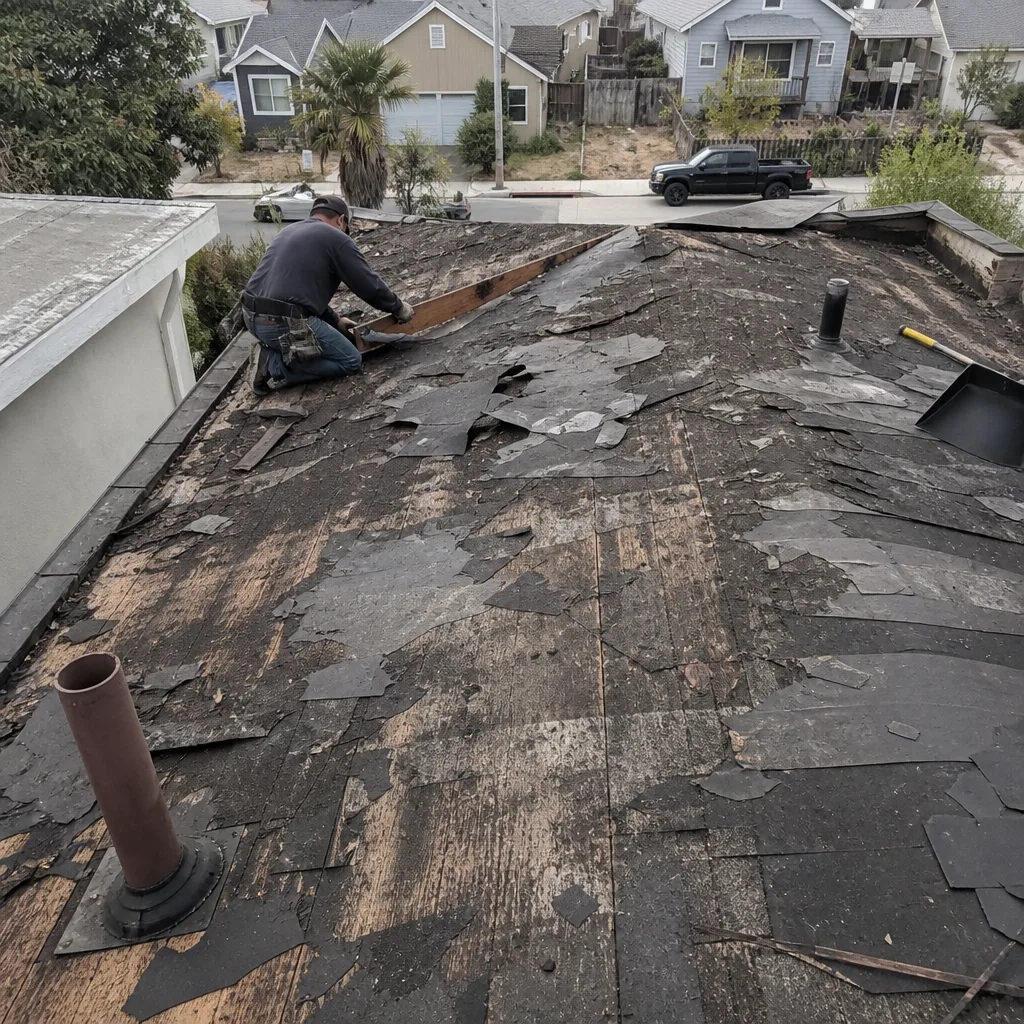 Before
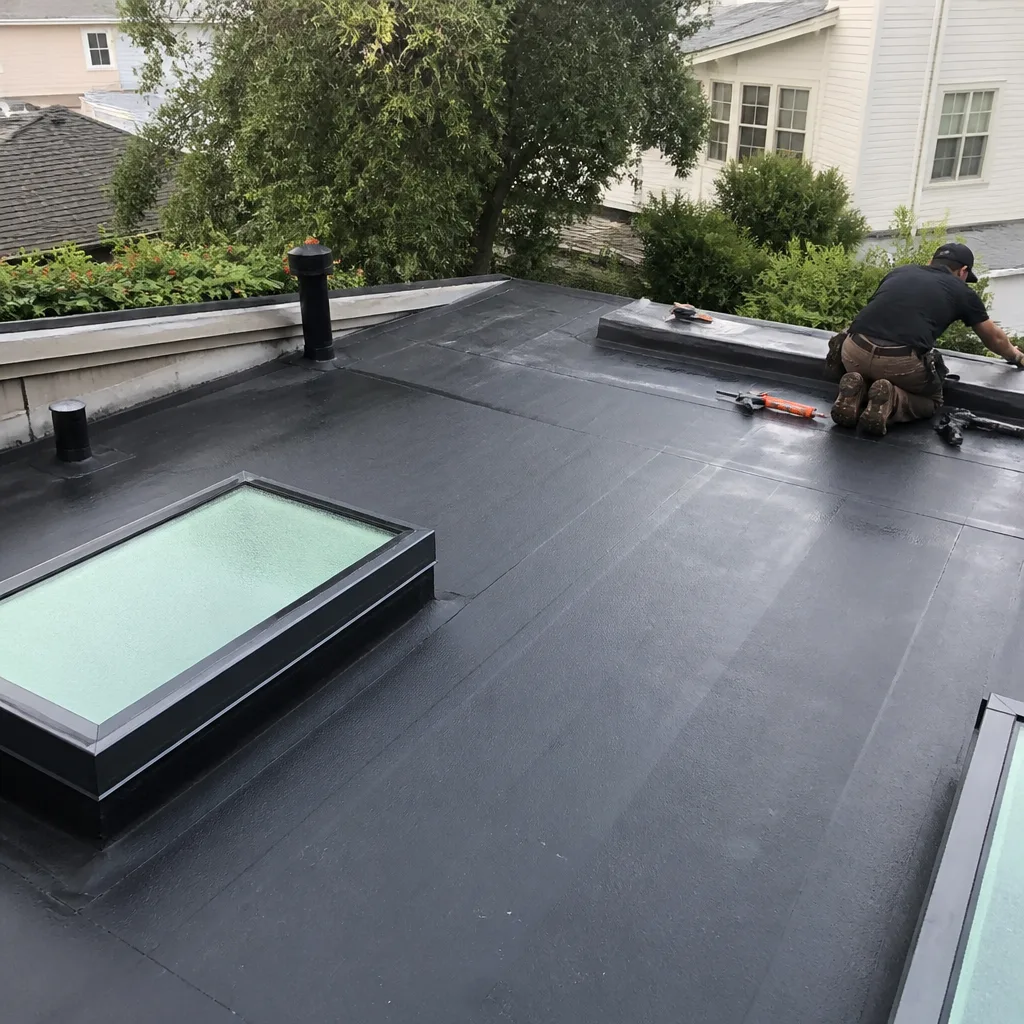 After
After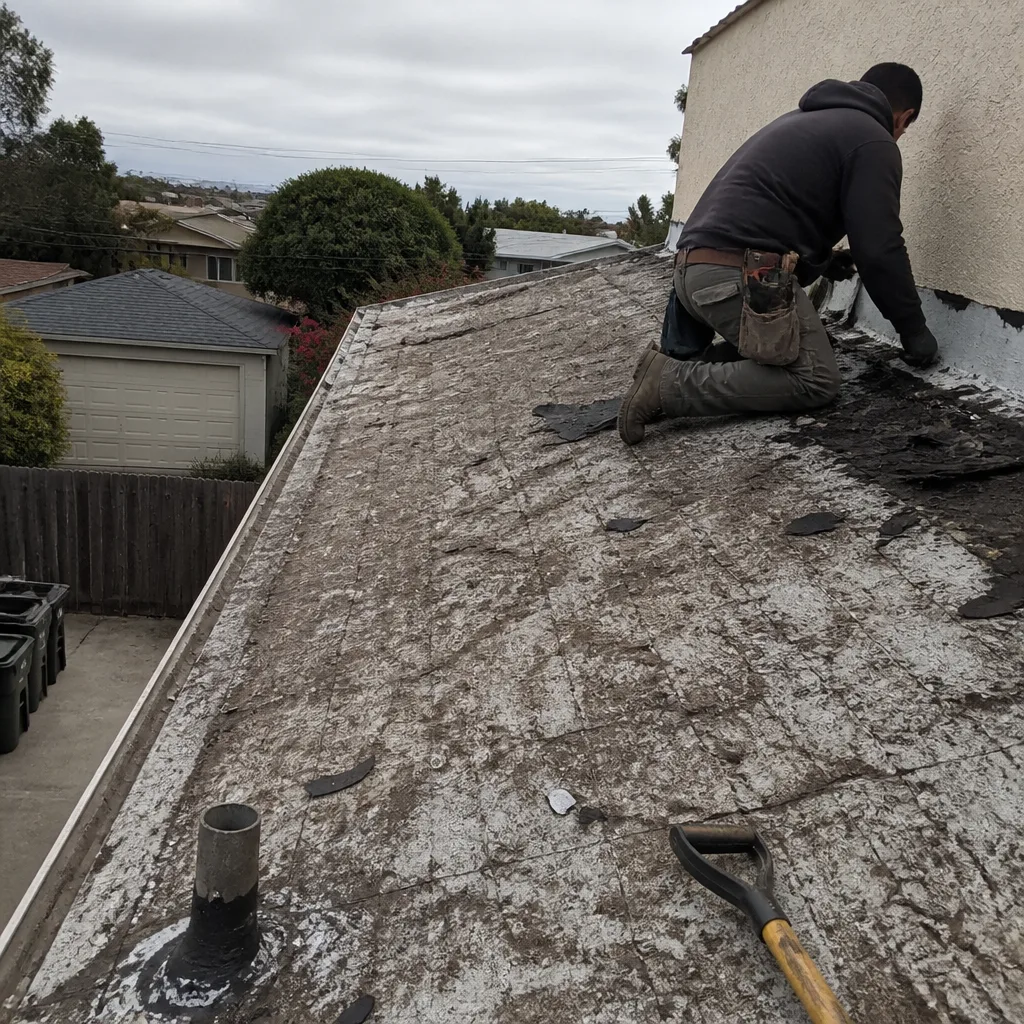 Before
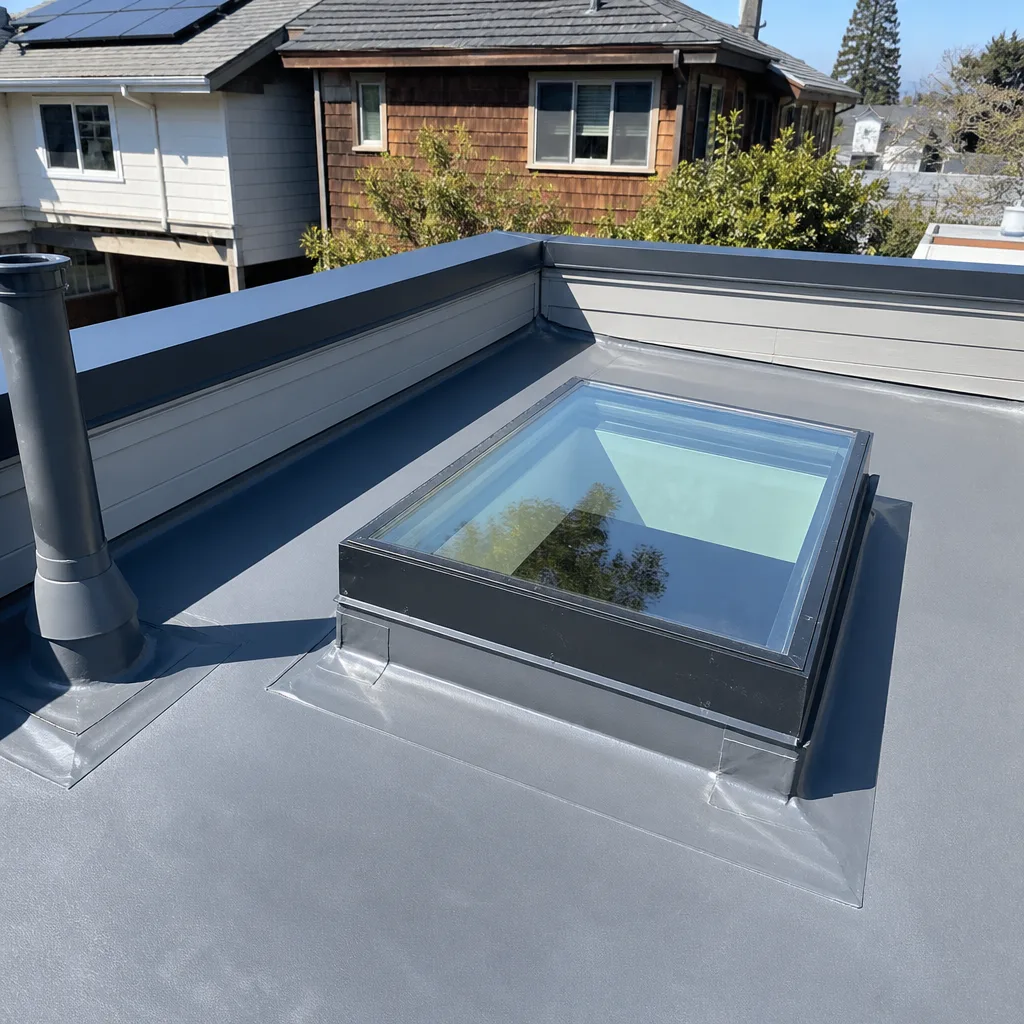 After
After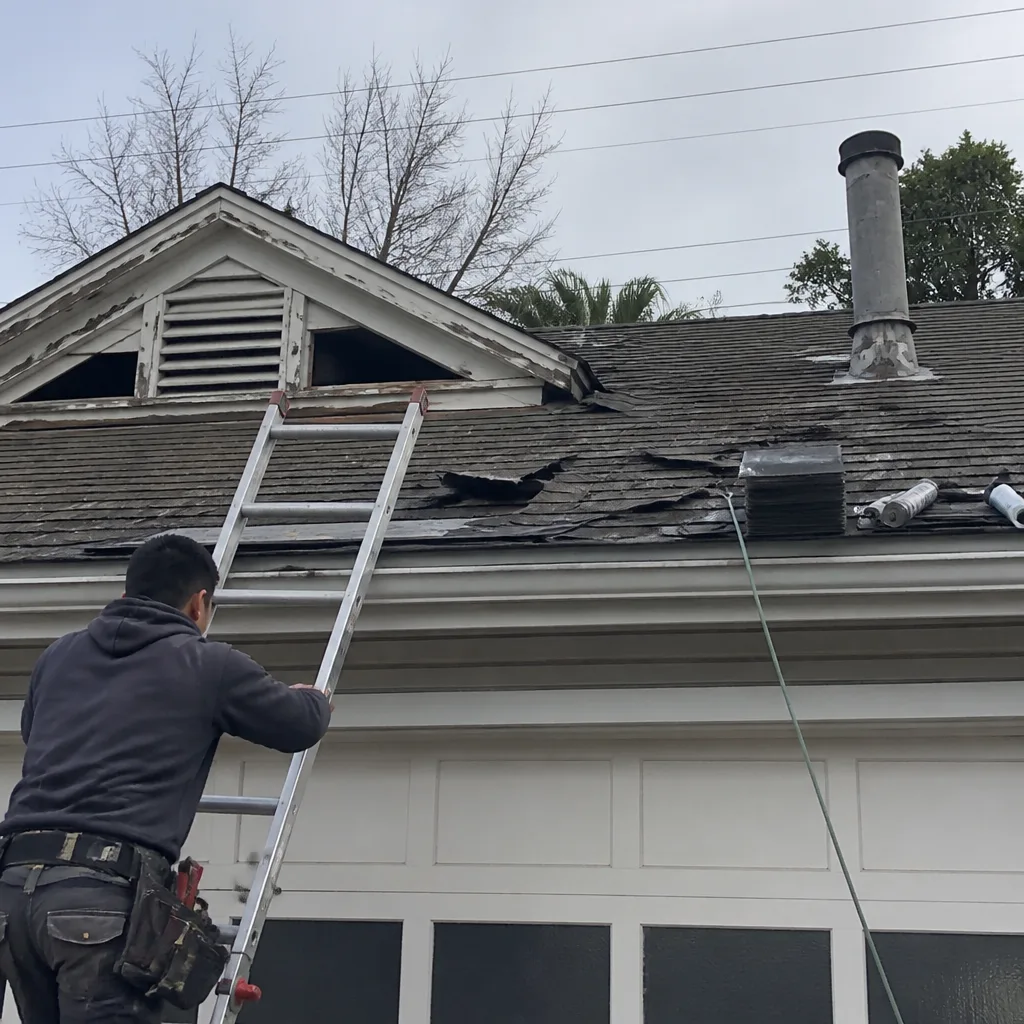 Before
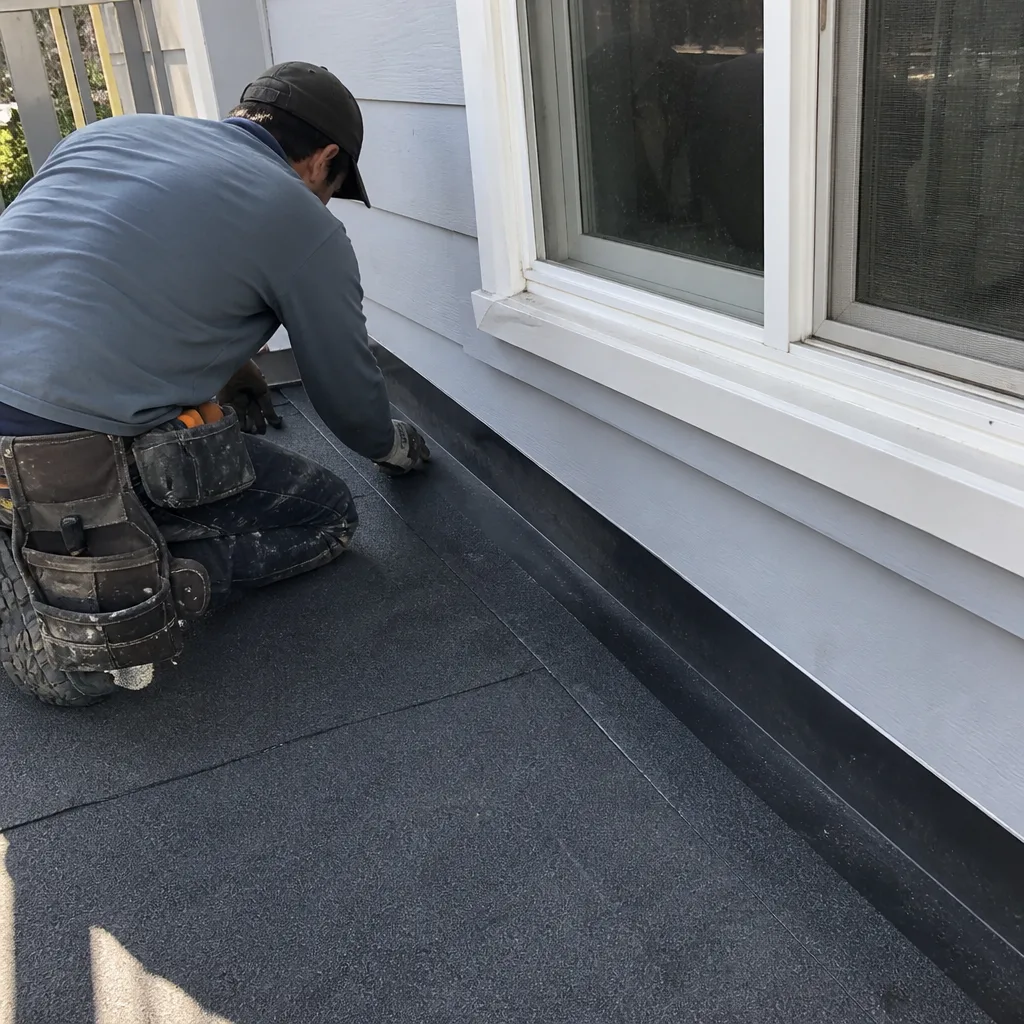 After
After