
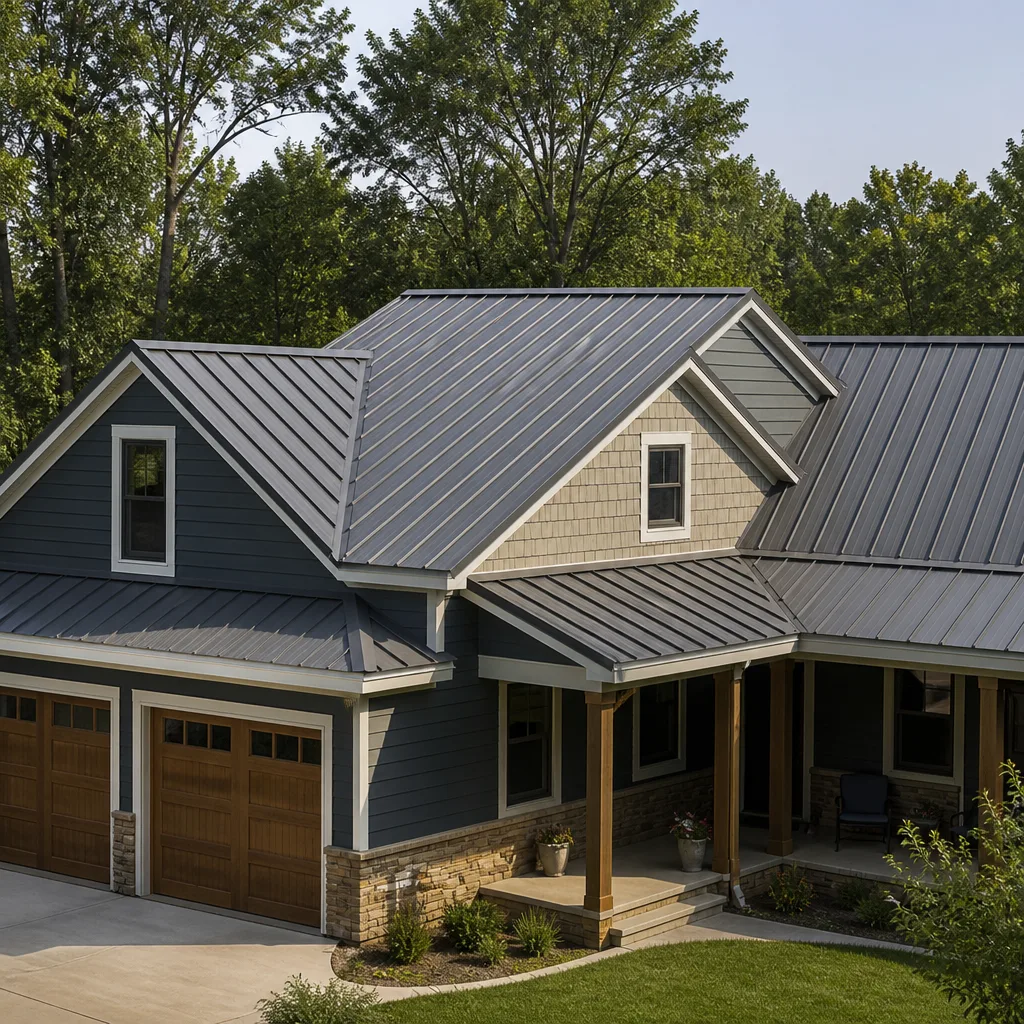
 Metal roofing
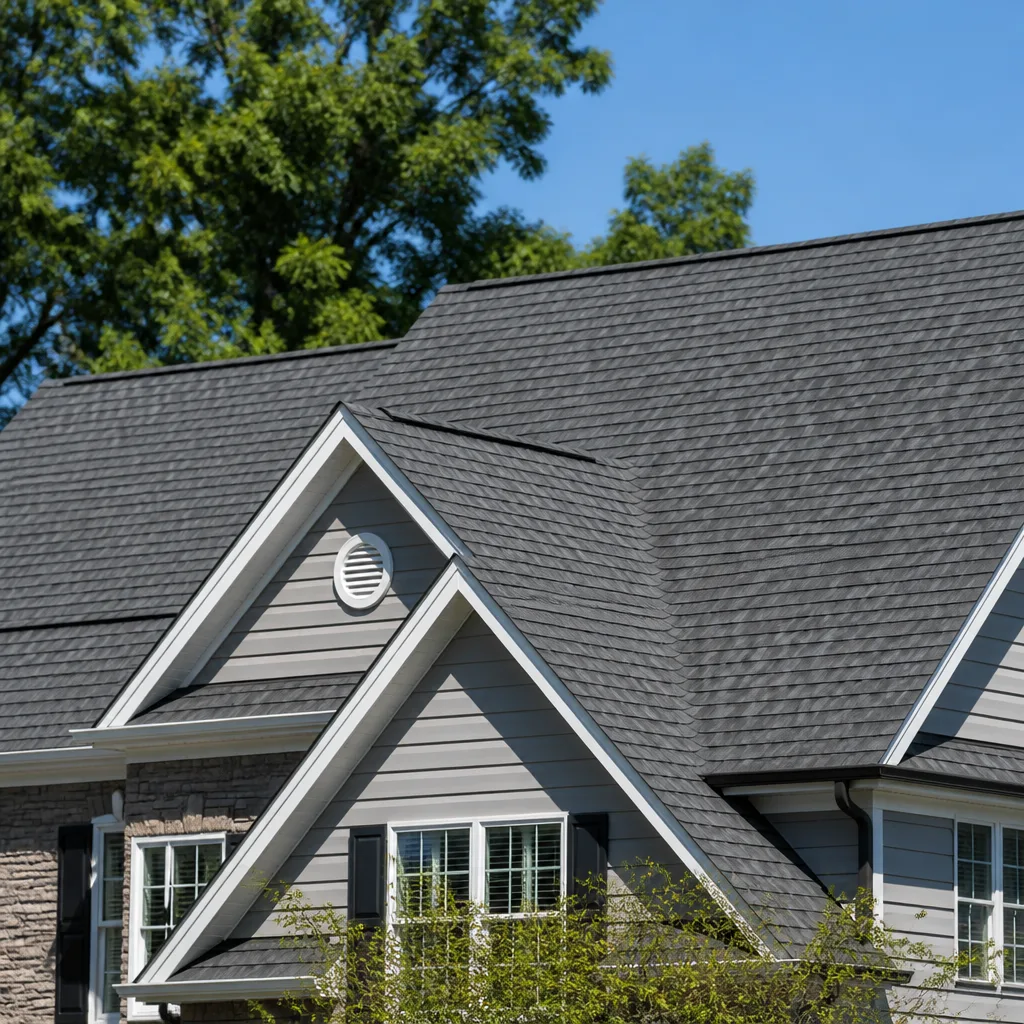 Architectural shingles
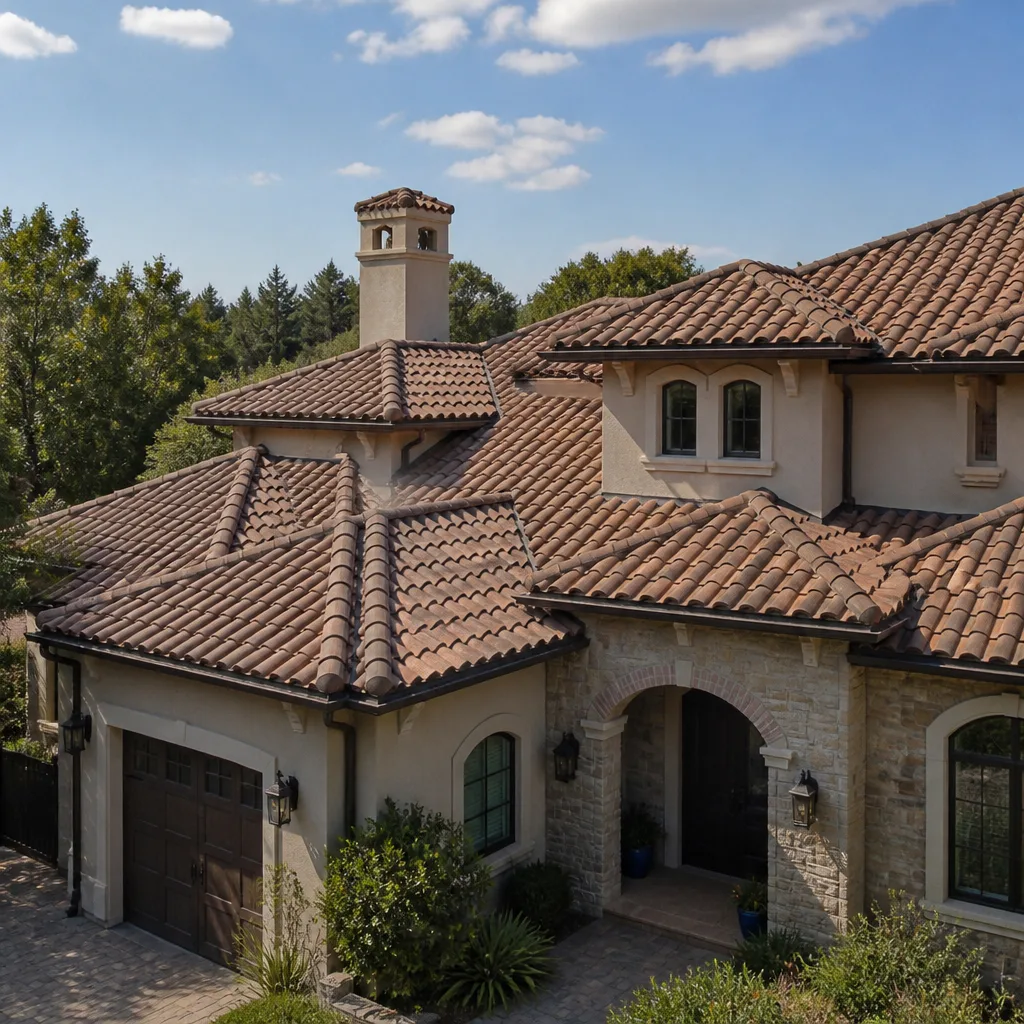 Tile roofing
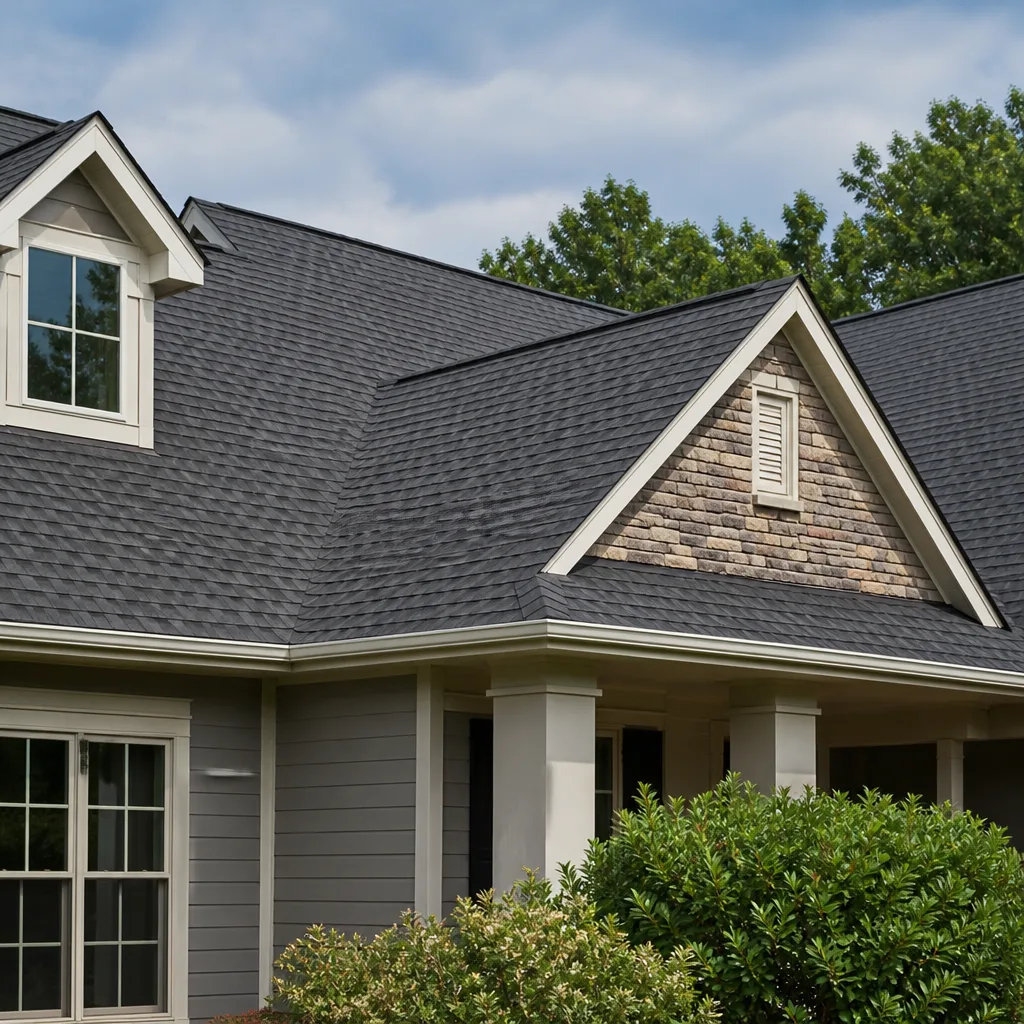 GAF
GAF Owens Corning
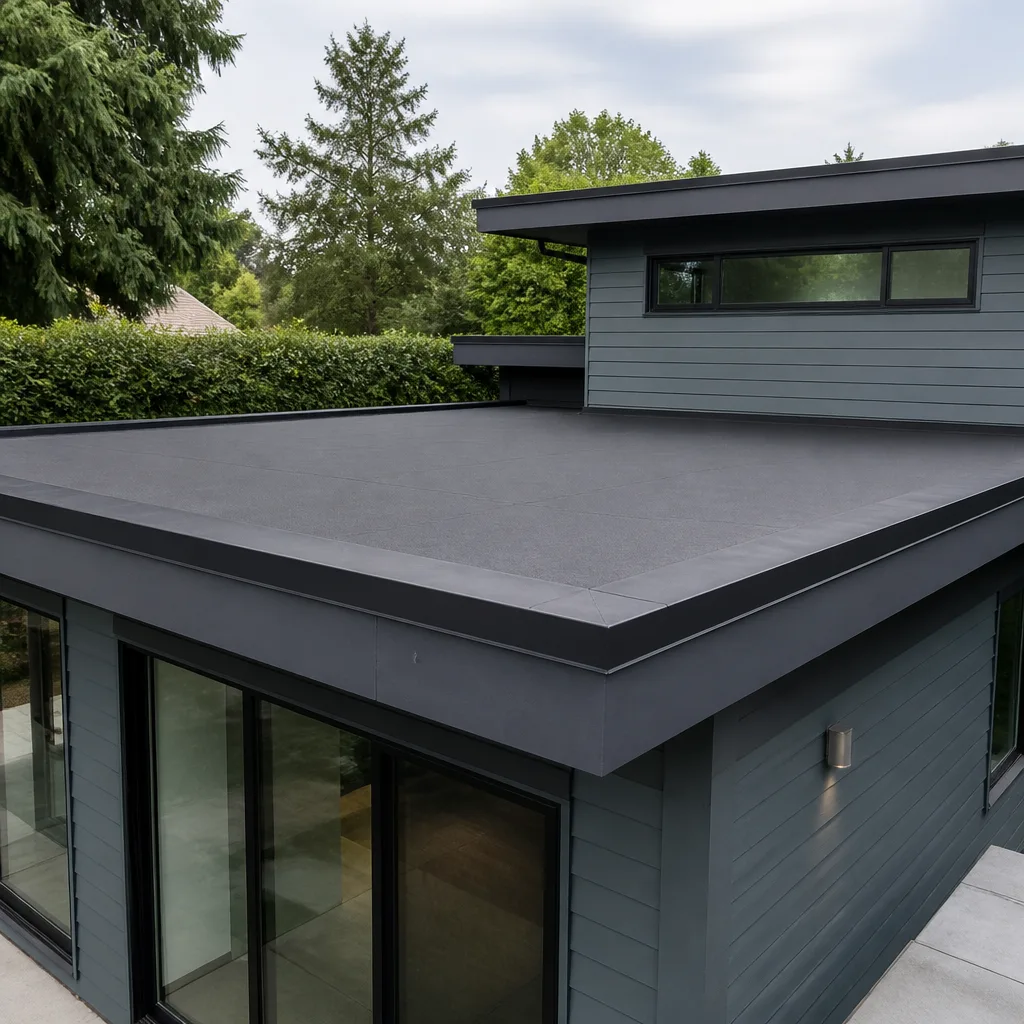 Flat & low-slope
Free roof inspection with deck photos before we talk money - GAF and Owens Corning certified installation
Tamko Flashing Replacement: The San Francisco Owner’s Guide
Tamko flashing replacement in San Francisco typically runs $280 to $640 installed, depending on the penetration type, roof pitch, and how much surrounding shingle or membrane needs to be lifted. We stock Tamko-compatible flashing on our trucks and can usually complete the swap the same visit we diagnose it. Most owners discover the problem after a stain appears on a ceiling or wall below a chimney, skylight, vent pipe, or valley – the flashing has rusted through, pulled loose, or was never lapped correctly to begin with.
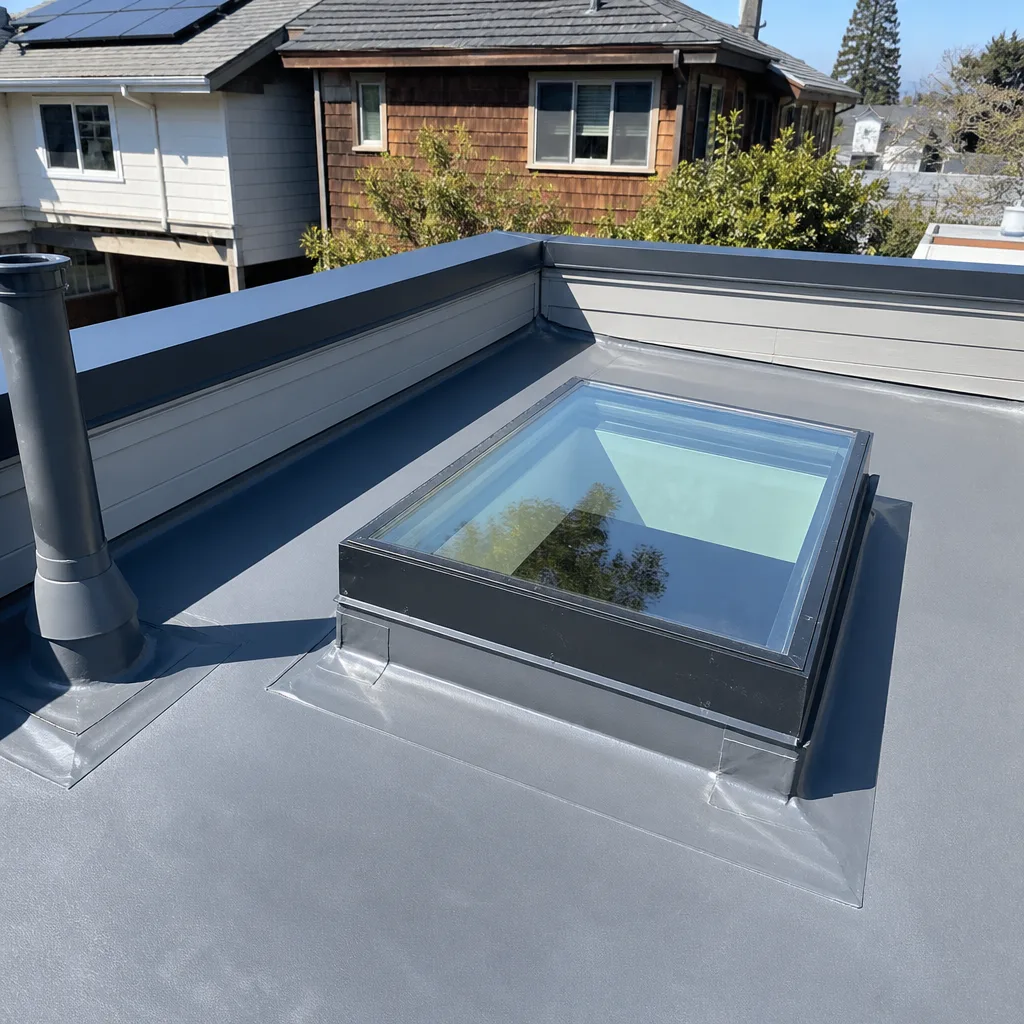
Flashing is the metal or membrane material that bridges the seams where your roof meets something else: a chimney, a wall, a pipe, a skylight, or another roof plane. When it fails, water gets exactly where it should not. In San Francisco, we see flashing fail faster than in drier climates because the marine air keeps metal damp for long stretches, and the constant fog-and-sun cycle expands and contracts the joints. Travis Oakley and our crew have replaced flashing on everything from flat torch-down roofs in the Sunset to steep Victorian pitches near Alamo Square, and the failure pattern is consistent: the sealant breaks down first, then the metal corrodes, then the leak starts.
Which Tamko Models This Applies To
Tamko flashing components are designed to pair with Tamko shingle lines – most commonly Heritage, Heritage Premium, Elite Glass-Seal, and Twinflow roll roofing. The flashing itself is not shingle-specific in the way a color-matched ridge cap is. What matters is the profile and the material gauge. Tamko offers galvanized steel, aluminum, and in some lines a stainless option for coastal exposure. If you are within a few blocks of the ocean in the Outer Richmond or Outer Sunset, salt spray will eat standard galvanized flashing in as little as eight to ten years. We sometimes recommend stepping up to a heavier gauge or a stainless substitute for those exposures.
Here is the compatibility gotcha worth knowing: Tamko step flashing and apron flashing are cut to standard dimensions – typically 10-inch by 8-inch for step pieces and 4-inch by 4-inch for pipe collars – but the brand stamps its own part numbers on the packaging, and those numbers change between manufacturing runs. Do not throw away the old flashing before we measure it. We match by physical dimensions and material, not by a part number that may have been superseded. If your roof has Tamko shingles with a specific exposure, we match the flashing height so the next course laps it correctly. Aftermarket flashing from GAF, Owens Corning, or CertainTeed often works fine as a substitute, and we stock those too. The decision comes down to metal thickness, finish, and whether the piece is visible or buried.
Styles & brands we work with
Signs Your Tamko Flashing Replacement Is Failing
- Ceiling or wall stains below a penetration. Water travels sideways along rafters before it drips, so the stain often appears several feet from the actual flashing failure. This is the most common first signal.
- Rusted, cracked, or lifted flashing metal visible from the ground or a ladder. On chimneys and walls, look for metal that has pulled away from the brick or siding. Rust blooms mean the galvanizing is gone and the steel is thinning.
- Granules from shingles collecting in gutters near flashing points. When flashing lifts, the shingles around it flex more in the wind, and that flexing sheds granules faster than the rest of the roof.
- Damp insulation or water in the attic after rain. This one is worth checking yourself if the attic is accessible. Bring a flashlight after a storm and look at the underside of the decking around chimneys and pipes.
- Mold or musty smell in a room with no plumbing. A slow flashing leak can dampen wall cavities for years before it shows as a stain. The smell often arrives first.
Replacement Cost & What’s Included
| Flashing Type | Installed Price Range (San Francisco) |
|---|---|
| Pipe boot / vent collar replacement | $280 – $420 |
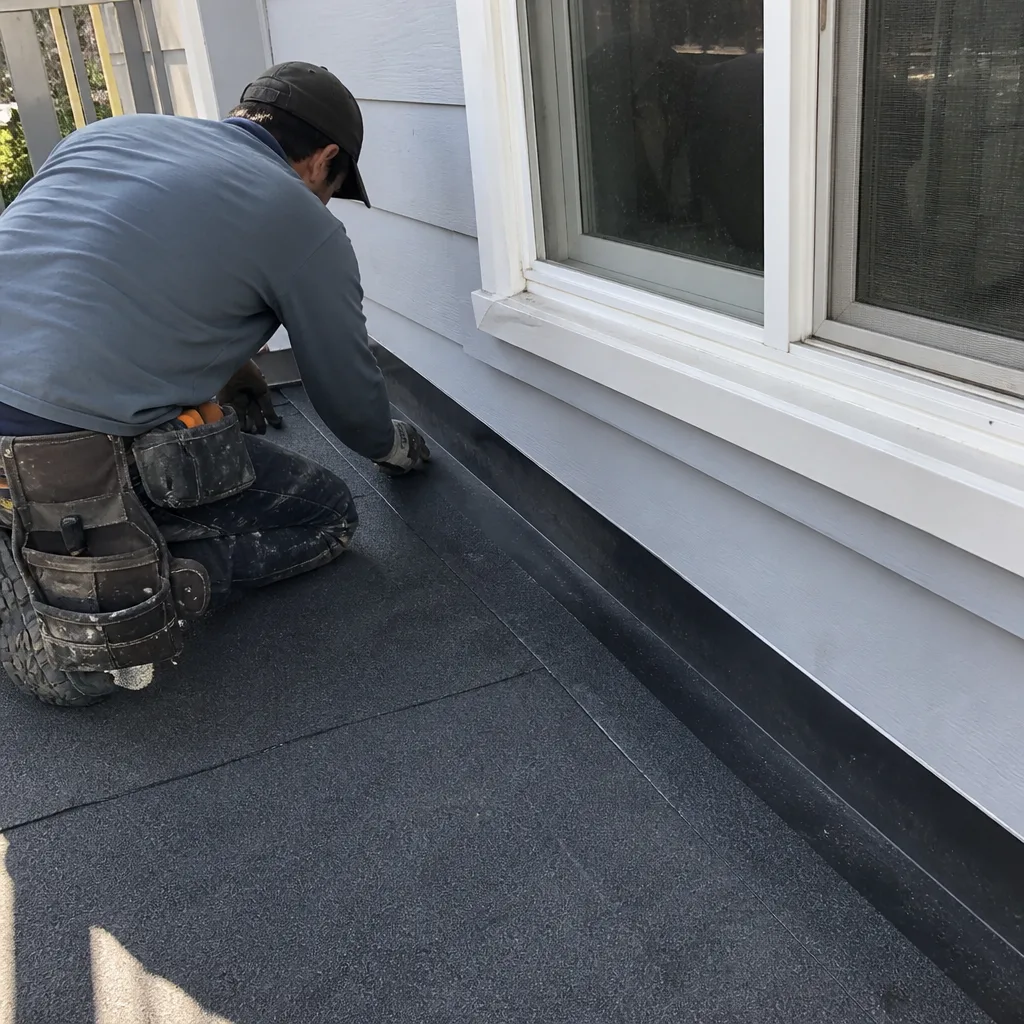
| Step flashing along a wall (per 10 linear feet) | $350 – $550 |
| Chimney apron and counter-flashing | $420 – $640 |
| Valley flashing replacement | $450 – $680 |
| Skylight flashing kit | $380 – $590 |
What drives the range is access and condition. A single pipe boot on a low-slope roof is straightforward. A chimney flashing job on a steep Queen Anne with a cricket that needs rebuilding will run higher because of the labor and the additional membrane work. Every estimate is a written, line-item price on paper before any work starts, and that number does not change at the door. The job includes removing the old flashing, inspecting the decking underneath, replacing any rotted wood if needed, installing the new Tamko-compatible flashing, and sealing all laps. The work is covered by the 365-Day Done Right Promise, in writing, for one full year. If the flashing fails in that period, we come back and fix it at no charge.
See the difference
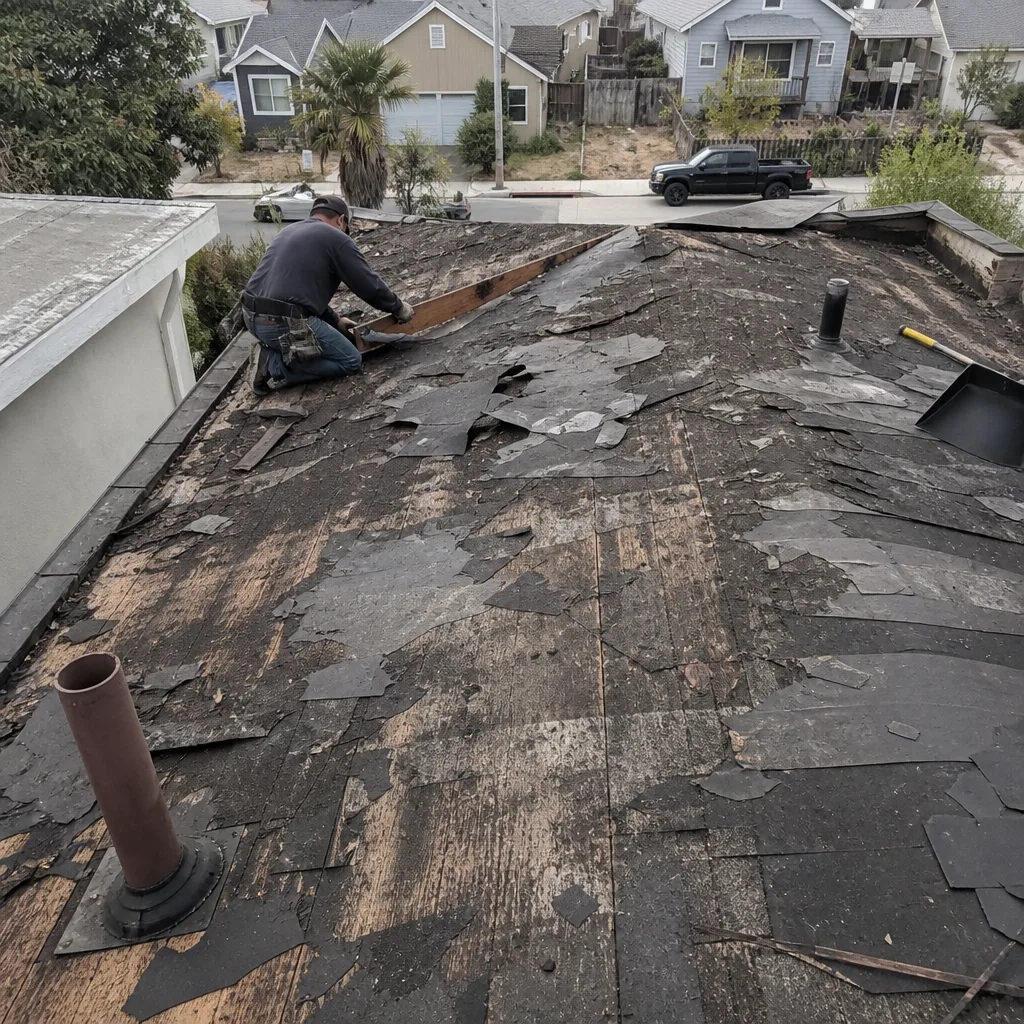 Before
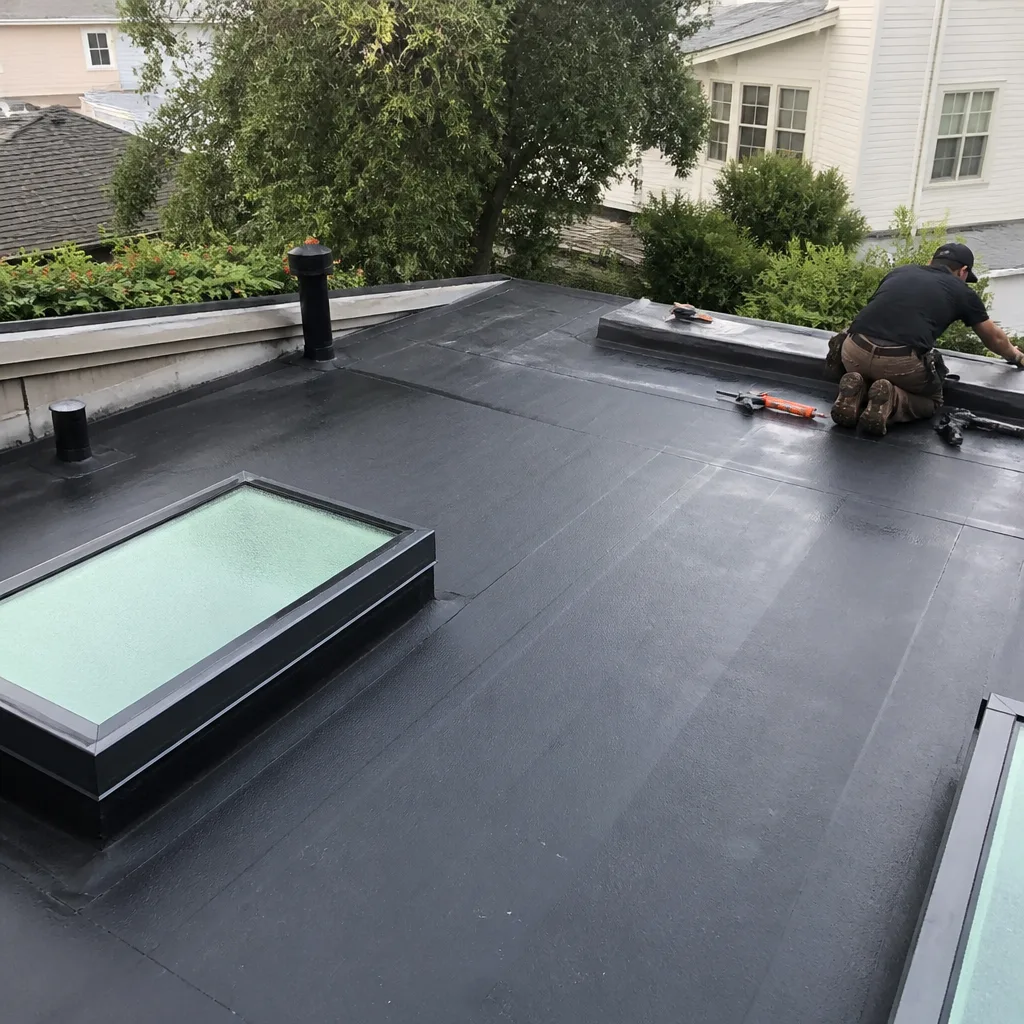 After
After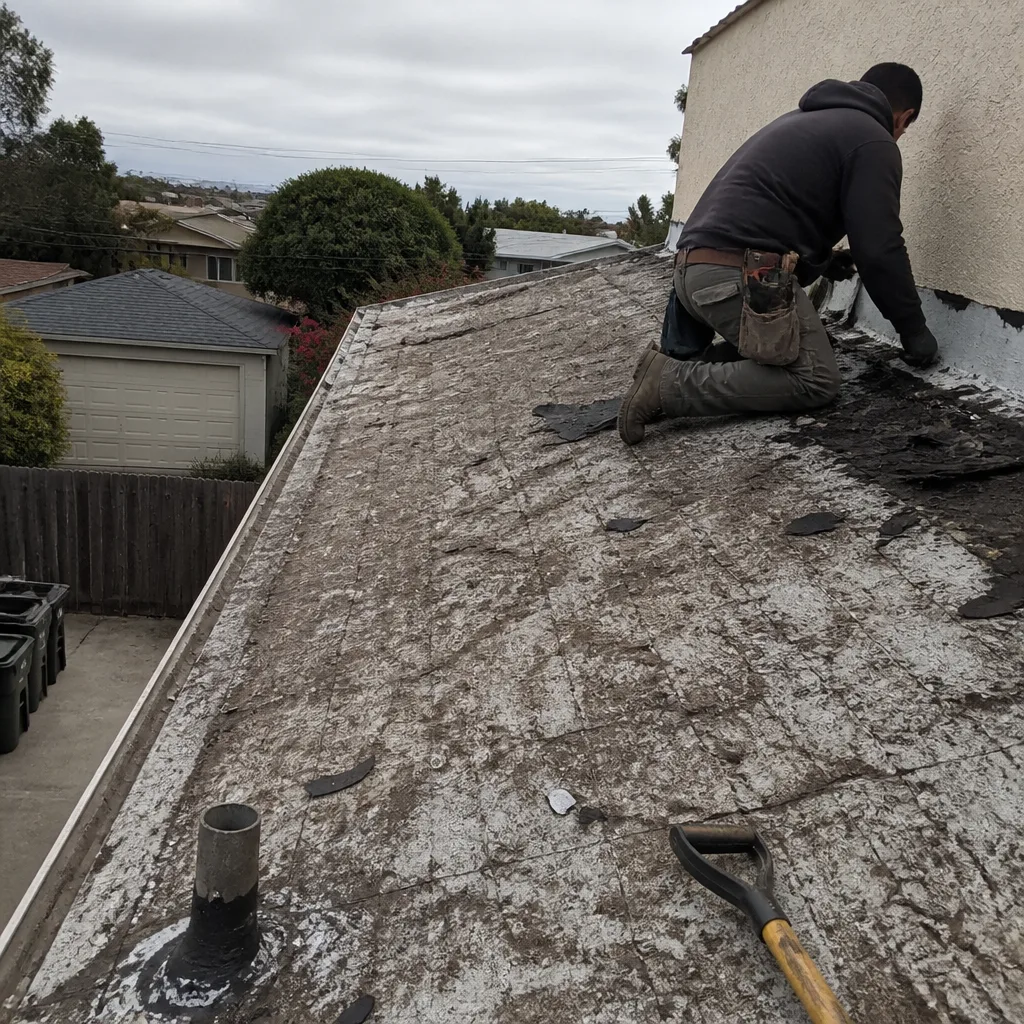 Before
 After
After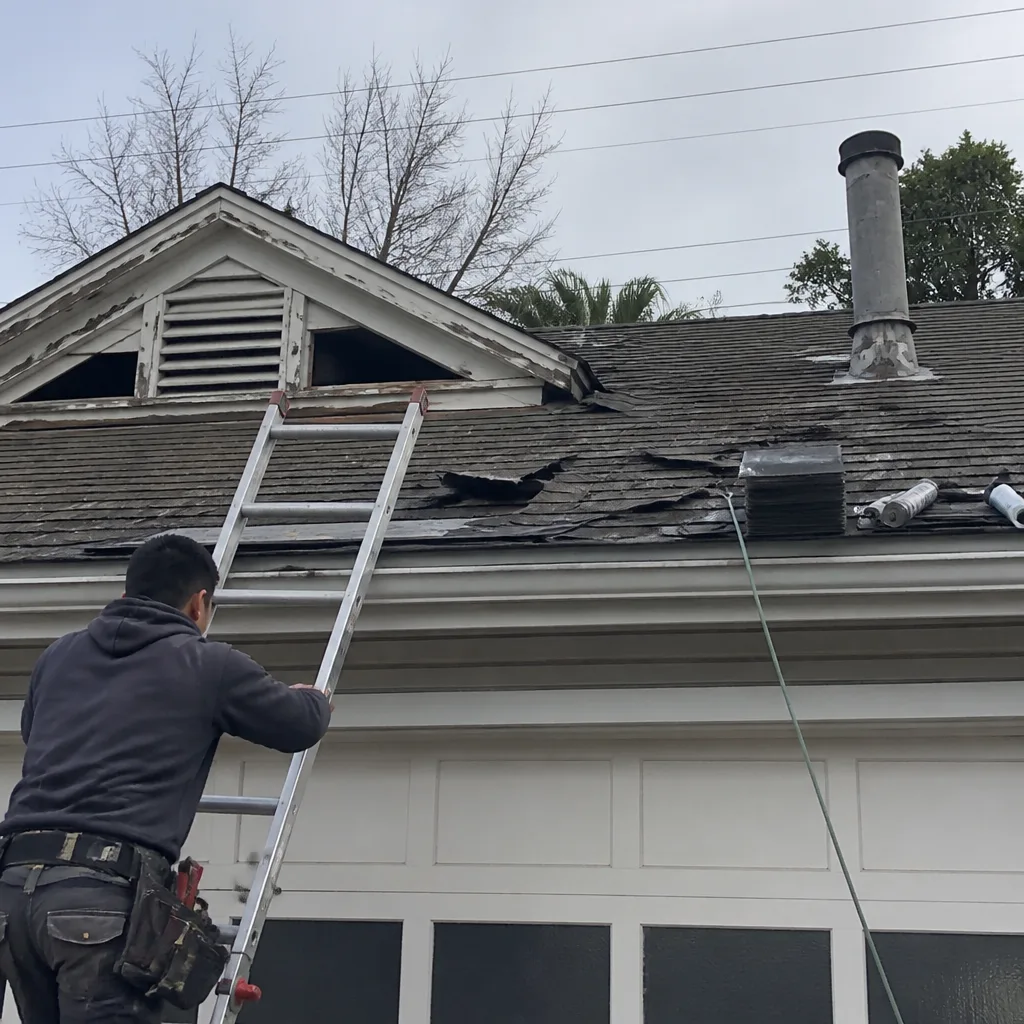 Before
 After
AfterDIY or Call Us?
Flashing replacement sounds simple and sometimes it is – but the danger is not the part itself. The danger is the ladder work and the slope. San Francisco roofs are often steep, and many are three-story climbs. A fall from a two-story eave will end a workweek permanently on a bad day. We do not recommend homeowners go up on the roof for this fix. What you can safely check from the ground or from inside: look for visible rust or lifted metal with binoculars, inspect the attic after rain, and feel for soft spots on ceilings below penetrations.
Where DIY goes wrong, beyond the fall risk, is the sealing. Flashing that is not lapped correctly – or sealed with the wrong caulk – will leak again within a season, and the damage underneath compounds. A good roof shouldn’t need to be talked about – it should just hold. If you think your Tamko flashing has failed, call (831) 318-8819. We will look at it, tell you honestly whether it needs replacing now or can wait, and put the price on paper before anything is touched.
FAQs
Standard galvanized flashing in San Francisco lasts 10 to 15 years in most neighborhoods, but closer to 8 to 10 near the ocean where salt and fog accelerate corrosion. Aluminum lasts longer, but it can react with some treated lumber and certain roofing cements. Heavy-gauge or stainless flashing can last 20-plus years. Call (831) 318-8819 for an inspection and we will tell you what you have and what is realistic for your location.
Sometimes, yes – if the flashing is intact and only the sealant has failed, we can clean and re-seal the laps. But if the metal has rusted through or pulled loose from the substrate, patching it is a temporary fix that will leak again. We will show you what we see and recommend the repair only if it will actually hold. Estimates are free.
Most single-penetration flashing jobs – a pipe boot, a vent collar, or a small step flashing section – take two to four hours including setup and cleanup. Chimney flashing with counter-flashing and a cricket rebuild can take a full day. We work around San Francisco’s fog and wind, and we do not rush a sealant that needs to cure. Call (831) 318-8819 for a specific timeline on your roof.
Yes. We carry common Tamko-compatible flashing profiles – pipe collars, step flashing, apron flashing, and chimney counter-flashing – in galvanized, aluminum, and stainless. We also stock GAF, Owens Corning, and CertainTeed flashing when a specific profile or gauge makes more sense for the roof. Same-visit replacement is typical unless your roof requires a custom bent piece.
Get a Written Flashing Replacement Estimate in San Francisco
If you have a Tamko roof and suspect a flashing failure, call (831) 318-8819. A live person answers – no voicemail, no automated system. We will schedule a time that works, send a background-checked uniformed technician, and you will have a written price before any work starts. Replacing failed flashing now costs a few hundred dollars. Replacing rotted decking and ceiling drywall later costs thousands. That is the trade, and we would rather fix the flashing.
Written by Travis Oakley, Owner, Brennan Roofing Co at Brennan Roofing Co San Francisco, serving San Francisco and nearby areas.